In the world of modern home construction and high-end remodeling, few architectural features spark as much debate as the vaulted ceiling. To some, it is the ultimate symbol of luxury—a way to transform a cramped room into a breathtaking cathedral-like sanctuary. To others, it is viewed as an “energy pit”—a waste of precious heating, cooling, and square footage.
If you are currently standing in a room and looking up, wondering if you should “raise the roof,” you are in the right place. Before committing to a renovation that involves structural engineering and significant investment, you must understand the nuance of this ceiling style. This article will explore the definitions, the polarizing pros and cons, and eight stunning design inspirations to help you decide if a vaulted ceiling is the right move for your home.
What Exactly is a Vaulted Ceiling?
At its most basic level, a vaulted ceiling is an architectural technique where the ceiling is extended upward from the side walls toward a center point, creating an arched or angled volume of space above the standard 8-foot or 9-foot head height.
While many people use the terms interchangeably, there is a subtle difference between a vaulted ceiling and a cathedral ceiling:
- Cathedral Ceilings: These are strictly symmetrical. They follow the pitch of the roofline exactly, meaning the interior ceiling looks like an upside-down “V” that matches the exterior roof.
- Vaulted Ceilings: This is a broader term. A vault does not necessarily have to follow the roof pitch. It can be asymmetrical, arched, domed, or even “coved.” It is essentially any ceiling that rises higher than the supporting walls.
- Historically, vaults were a necessity in stone masonry (think of ancient Roman basilicas or Gothic cathedrals) to support heavy roofs. Today, they are a stylistic choice designed to manipulate light and emotion within a home.
The Weight of the Decision: Pros and Cons
Choosing a vaulted model is not just a cosmetic change; it is a structural one. Here is a deep dive into the advantages and disadvantages you must weigh.
The Pros: Why We Love Them
- Maximizing “Wasted” Attic Space Many traditional homes have a “dead” attic space—a dark, dusty triangle of air between the ceiling and the roof. By vaulting the ceiling, you reclaim that volume. The result is a dramatic increase in “visual square footage.” Even if the floor area remains the same, the room feels twice as large.
- Psychological Expansion for Small Homes In a small house, horizontal space is a premium. When you can’t build out, you build up. A vaulted ceiling in a small 1,000-square-foot cottage can prevent the “closed-in” feeling, making a modest living room feel like a grand hall.
- The “Light Well” Effect Vaulted ceilings provide the perfect canvas for high-placed windows and skylights. Because the ceiling is higher, natural light can penetrate deeper into the floor plan, reaching corners that would otherwise be dark. This can significantly reduce your dependency on artificial lighting during the day.
- Instant Character and Resale Value A vaulted ceiling is a “hero feature.” When potential buyers walk into a home with a soaring, wood-beamed ceiling, there is an immediate emotional response. It gives a home a sense of history and “custom” character that standard flat-ceiling homes lack.
- Design Versatility Whether you are chasing a rustic farmhouse vibe with exposed timber or a sleek, ultra-modern look with minimalist white drywall, the vault acts as a versatile backdrop. It elevates every design style it touches.
The Cons: The Reality Check
- Substantial Financial Investment Raising a ceiling is expensive. If you are remodeling an existing home, you aren’t just moving drywall; you are likely re-engineering the roof trusses. You must account for:
- Structural engineering fees.
- Increased labor hours for working at heights (scaffolding is required).
- Higher material costs for specialized insulation and finishing.
- The Heating and Cooling Challenge Physics is the enemy of the vaulted ceiling. Heat rises. In the winter, all your expensive warm air will sit 15 feet above your head, while you shiver at floor level. Conversely, in the summer, a large volume of air takes much longer to cool down.
- Solution: You will need high-output ceiling fans and potentially a more robust HVAC system to manage the air circulation.
- Maintenance Difficulties Have you thought about how you will change a lightbulb 20 feet in the air? Or how you will dust the cobwebs off the top of a ceiling fan? Maintenance in a vaulted room requires specialized ladders and, often, professional help, which adds to the long-term cost of the home.
- Difficult to Retrofit If you buy an existing home with a flat ceiling, vaulting it is not always possible. If your house uses “fink trusses” (W-shaped wooden supports), removing the bottom chord to create a vault could cause your roof to collapse. You would need to replace the entire roof structure with a “ridge beam.”
- Permanent Style Choice Unlike a paint color, you cannot easily “undo” a vaulted ceiling. If interior design trends shift back toward cozy, lower-ceiling spaces in twenty years, lowering the ceiling back down is another major construction project.
- Vaulted ceilings typically increase construction costs by 5–20% compared to flat ceilings due to additional materials, structural design, and specialized labor. According to Real Homes, the cost of raising the ceiling in a 20×20 ft living room can be as much as $18,000–$25,000 in a retrofit project, not including surface costs like finishes and lighting.
8 Stunning Vaulted Ceiling Inspirations
To help you visualize the potential of your space, let’s look at eight distinct ways to execute this architectural feature.
-
The Skylight Symphony
One of the most effective ways to use a vault is to treat it as a light catcher. By installing skylights directly into the pitched sides of the vault, you create a “vertical garden” of light.
- Design Tip: Use motorized skylights that can open. This allows the hot air trapped at the top of the vault to escape in the summer, acting as a natural chimney to cool your home.
-
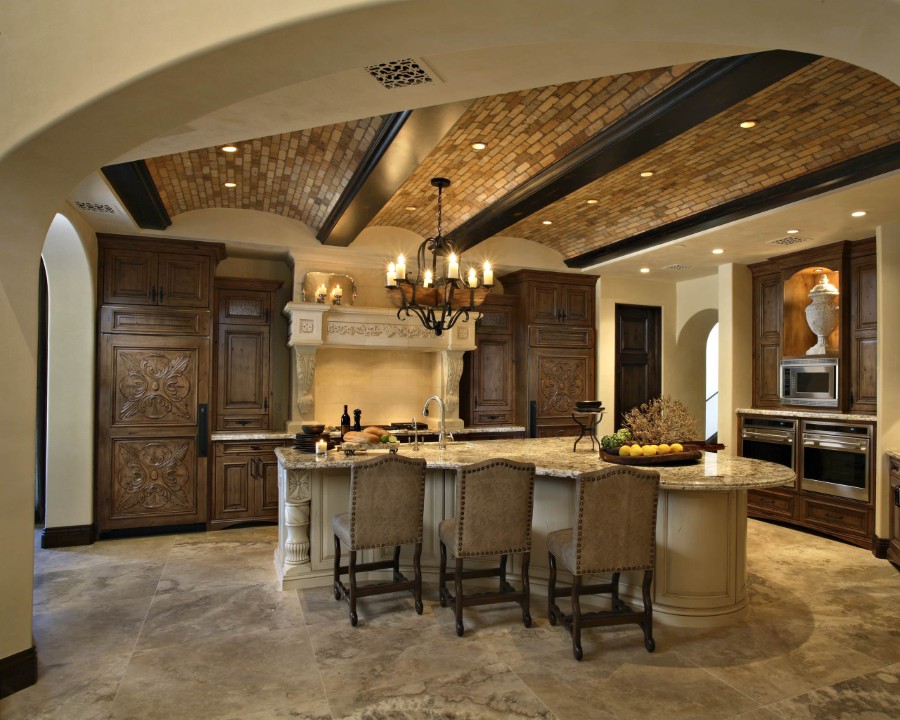
The Creative Brick Barrel Vault
For those who crave an industrial or Mediterranean feel, the barrel vault (a continuous arch) made of exposed brick is a masterpiece of texture.
- Why it works: Brick adds warmth and “weight” to a room. While most vaults feel “airy,” a brick vault feels “grounded” and historic. It is particularly effective in wine cellars, kitchens, or lower-level media rooms.
-
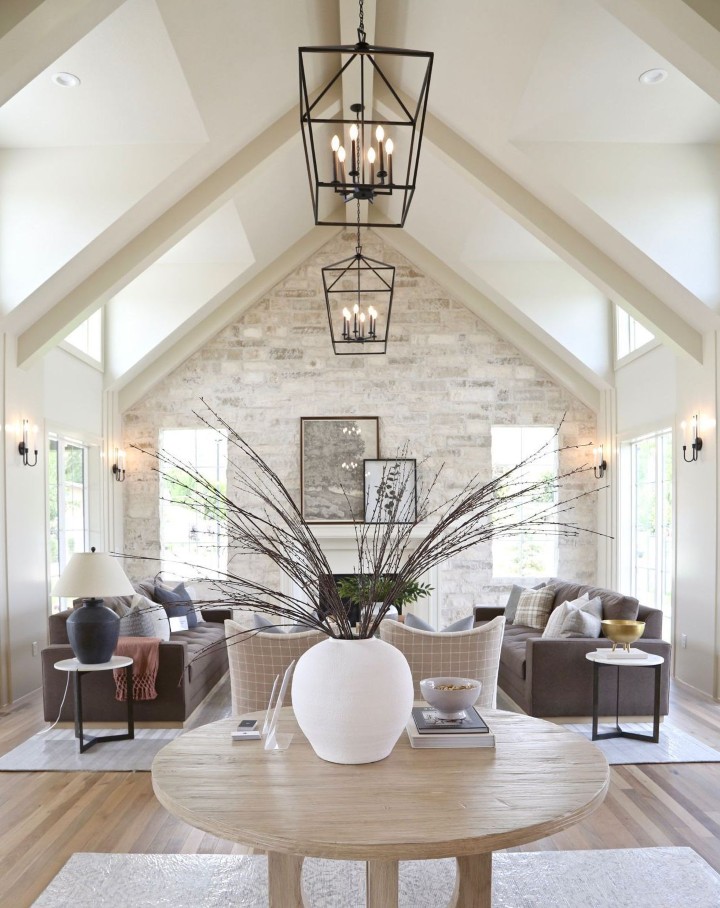
The “Clear White” Scandi-Minimalist
If you have a small room, follow the rule of “The Three Ws”: White, Wood, and Width. By painting a vaulted ceiling a crisp, reflective white and pairing it with light wood floors, the boundaries of the room seem to disappear.
- Aesthetic Impact: This creates a “gallery” feel. It is the perfect choice for homeowners who want their furniture and art to be the stars of the show, using the architecture as a silent, elegant supporter.
-
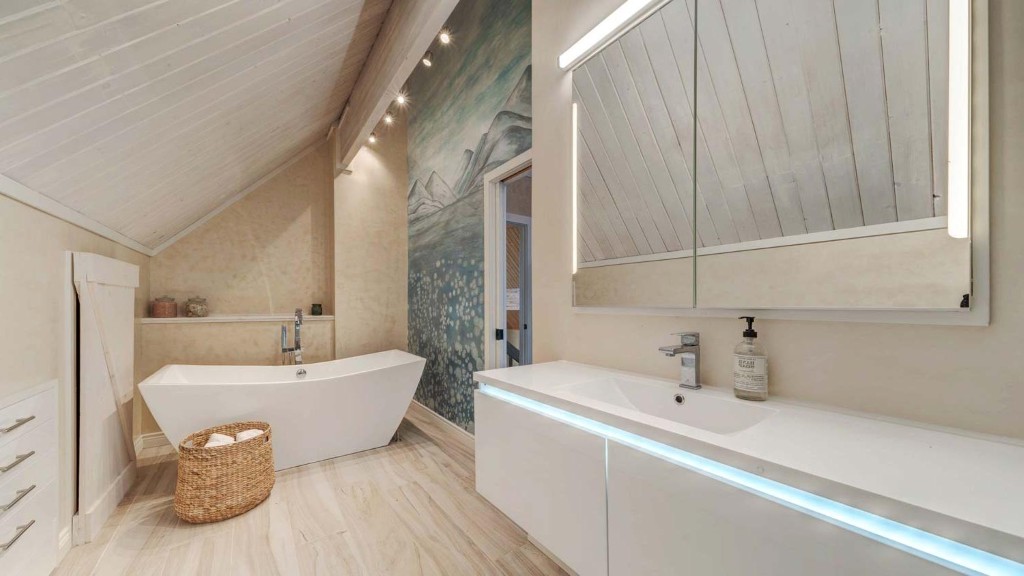
Shabby Chic and Soft Tones
White and brown aren’t the only options. The “Shabby Chic” or “Provincial” style uses soft pastels—think “duck egg blue,” “distressed cream,” or “pale sage”—on the ceiling panels.
- Why it works: These soft colors prevent a high ceiling from feeling too “cold” or intimidating. They bring the visual height down just enough to feel cozy while maintaining the luxury of space.
-
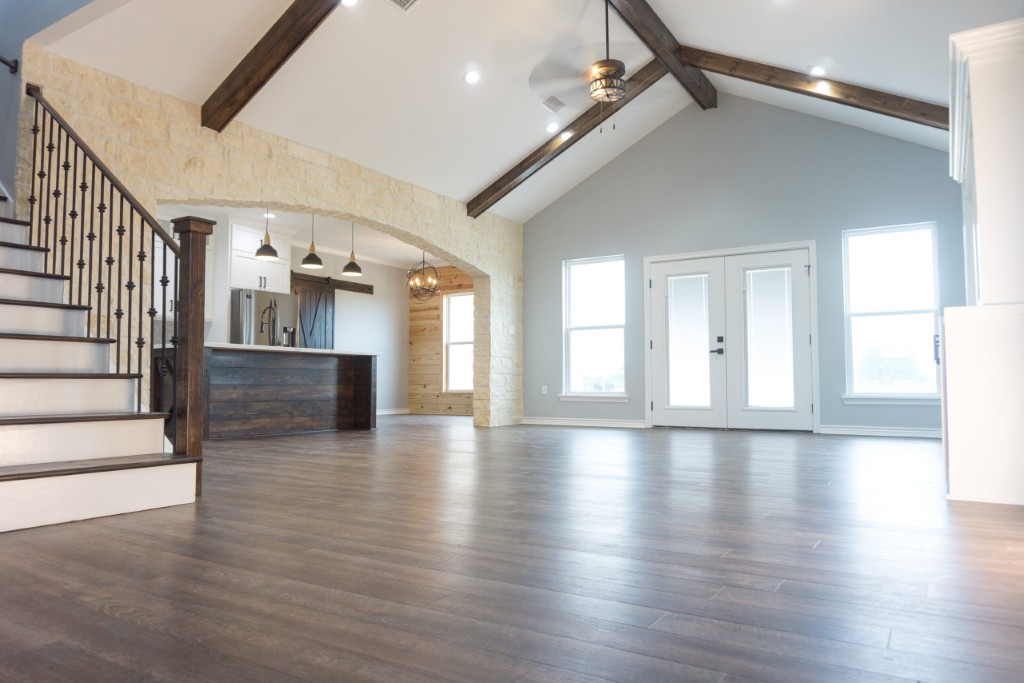
The Modern Farmhouse (Beams and LEDs)
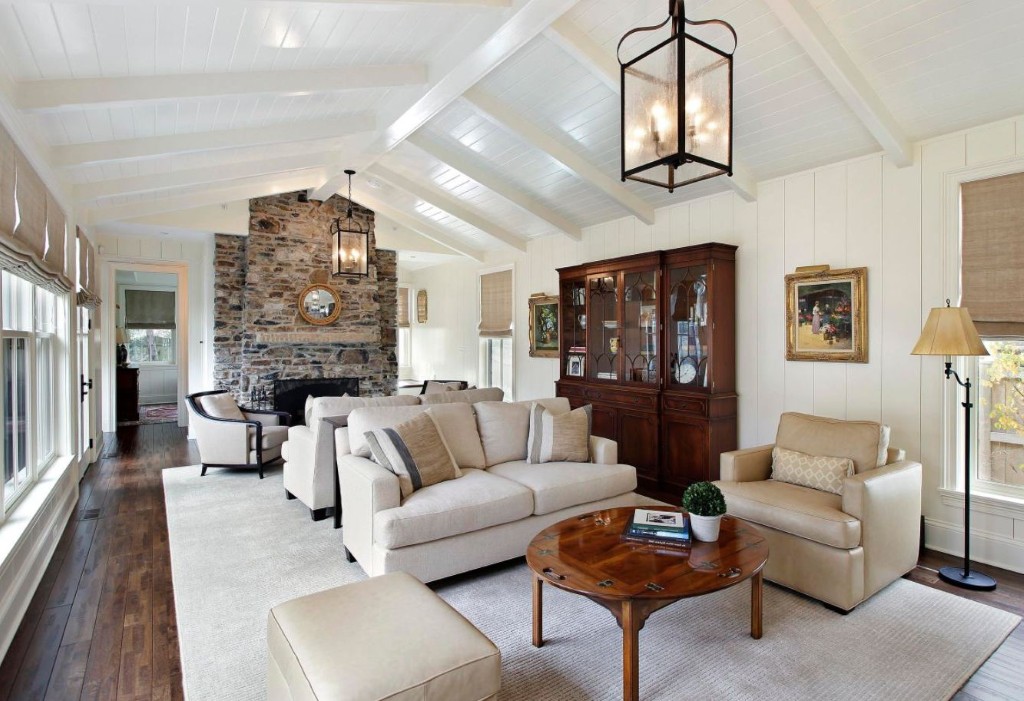
The farmhouse trend shows no signs of slowing down in 2026. The hallmark of this look is the contrast between white drywall and dark, reclaimed wood beams (faux or real).
- The Modern Twist: Don’t just rely on a hanging chandelier. Hide LED strip lights along the tops of the beams. This creates “indirect uplighting” that makes the ceiling appear to glow at night, highlighting the architectural bones of the house.
-
The One-Sided “Shed” Vault
You don’t always need a symmetrical peak. A “Shed Ceiling” or one-sided vault slopes upward in a single direction.
- The Strategy: This is a brilliant trick for bedrooms. By having the ceiling low over the bed (for coziness) and vaulting it upward toward a large window on the opposite wall, you get the best of both worlds: intimacy and drama.
-
Modern Classic Luxury (The Coffered Vault)
To achieve a high-end luxury look, combine a vault with “coffering” (recessed panels).
- The Result: This adds incredible “shadow lines” to the room. When combined with a grand crystal chandelier and oversized mirrors, the room feels like a 5-star hotel suite. It is the ultimate statement in a formal dining room or a “great room.”
-
The Stunning Corridor Vault
Hallways are often the most boring parts of a house. They are “transition spaces” that people rush through. However, a groin vault (where two barrel vaults intersect) can turn a narrow corridor into a stunning gallery.
- Visual Trick: Use “wash lighting” on the walls to draw the eye upward toward the vault. This stops the hallway from feeling like a tunnel and makes the journey through the house feel intentional and grand.
Technical Recommendations for the Homeowner
If you are convinced that a vaulted ceiling is for you, follow these professional recommendations to avoid “buyer’s remorse”:
- Prioritize Insulation: Standard fiberglass batts often aren’t enough for vaulted ceilings. Consider Spray Foam Insulation. It has a higher R-value per inch, which is crucial because you have less depth in a vaulted rafter than you do in a traditional attic. This will solve 90% of your “energy waste” concerns.
- Plan for Acoustics: Large, high, hard-surfaced rooms echo. To prevent your living room from sounding like a gymnasium, incorporate “soft” materials. Use large area rugs, heavy curtains, or even acoustic “clouds” hidden between beams to absorb sound.
- The “Human Scale” Rule: If your ceiling is 20 feet high, your furniture can feel like dollhouse furniture. You must “anchor” the room. Use tall floor lamps, large-scale art, or a high fireplace mantle to bridge the gap between the floor and the soaring ceiling.
- Circulation is King: Always install a reversible ceiling fan. In the winter, you can run the fan in reverse (clockwise) to gently push the warm air trapped at the ceiling back down to the floor without creating a cold draft.
Conclusion
The vaulted ceiling remains a controversial topic because it sits at the intersection of beauty and practicality. It is an emotional architectural choice that defies the cold logic of energy bills and maintenance schedules.
However, as we have explored, the value it adds to a home—both in terms of daily “feel” and eventual resale price—is significant. It turns a house into a sanctuary. It provides a canvas for light and a sense of freedom that a flat 8-foot ceiling simply cannot replicate. By understanding the different types—from the simple barrel to the complex groin vault—and preparing for the energy requirements, you can make an informed decision that elevates your lifestyle.
Final Recommendation: If you are building new, vault the main living area but keep the bedrooms at a standard height. This gives you the “wow factor” in your public spaces while maintaining the cozy, energy-efficient “nest” feel in your private quarters.
Would you like me to help you calculate a preliminary budget for a vaulting project or suggest specific color palettes for a farmhouse-style ceiling?