Why Your Entryway is the Most Important Room You Never Sit In
We often treat our homes like a series of destinations: the kitchen for cooking, the bedroom for rest, the living room for connection. In this functional mindset, the foyer house or entryway is frequently relegated to a “liminal space”—a mere transitionary gap between the chaos of the outside world and the sanctuary of the interior.
However, ignoring your foyer is a missed opportunity for emotional regulation. Architecturally, the entryway acts as the “handshake” of the home. It is the first sensory experience a guest encounters and the final visual cue you receive before heading out to face the world. A cluttered, dark, or neglected foyer creates a subconscious “stress spike,” whereas a curated entry offers an immediate sense of relief.
In this guide, we will explore why you should stop viewing your foyer as a pass-through and start treating it as a mood-lifting gallery, a high-functioning storage hub, and a design statement that sets the tone for your entire living space.
The Fundamentals of Foyer Curation
Designing the First Emotional Moment of a Home
Before buying furniture, choosing wall colors, or hanging the first piece of art, it’s essential to understand why the foyer exists. The foyer is not merely a transitional space; it is a psychological threshold. It is where the outside world dissolves and the private world begins. Whether consciously or not, everyone who crosses this boundary forms an immediate emotional judgment about the home beyond it.
A successful foyer balances three essential pillars:
- Aesthetics – the visual language of the home
- Utility – how the space supports daily rituals
- Emotion – the feeling it leaves behind
When these three elements work in harmony, the foyer becomes more than an entry point. It becomes an introduction, a pause, and a subtle promise of what lies ahead.
Understanding the Purpose of a Foyer
Historically, foyers existed to buffer homes from dust, cold air, and noise. In modern living, their role has evolved into something more psychological than practical. Today’s foyer is the first curated moment of intentional living.
This space must accomplish several things in seconds:
- Calm the nervous system after external stimulation
- Offer clarity and orientation
- Signal the home’s personality and values
A cluttered, poorly lit entryway communicates chaos—even if the rest of the house is immaculate. Conversely, a thoughtfully designed foyer can elevate even modest interiors.
The key lies in designing for arrival.
The Psychology of Color Selection
Why Entryway Color Choices Matter More Than You Think
Color is the fastest way to shape emotion. Before a person notices furniture or finishes, their brain processes color. In a foyer, this effect is amplified because the space is encountered in motion, not at rest.
The Principle of Differentiation
The most effective foyers follow a principle of intentional contrast. Rather than mirroring the color palette of adjacent rooms, the foyer should feel distinct—but harmonious.
Why? Because foyers are temporary spaces. You move through them, not live in them. This makes them ideal testing grounds for bolder decisions that might overwhelm a bedroom or living area.
Think of the foyer as a visual exhale.
Warm Tones: Creating Emotional Approachability
Warm colors have a primal effect. Terracotta, toasted almond, muted rust, and soft ochre recall earth, clay, and sunlight. These tones:
- Reduce psychological distance
- Create a sense of welcome
- Suggest warmth and human presence
In colder climates or urban settings, warm-toned foyers are particularly effective. They counteract the sterility of concrete, asphalt, and steel encountered outdoors.
To avoid heaviness:
- Pair warm walls with lighter ceilings
- Introduce natural textures like wood or linen
- Keep finishes matte rather than glossy
The goal is embrace, not enclosure.
Cool Tones: Designing a Mental Reset
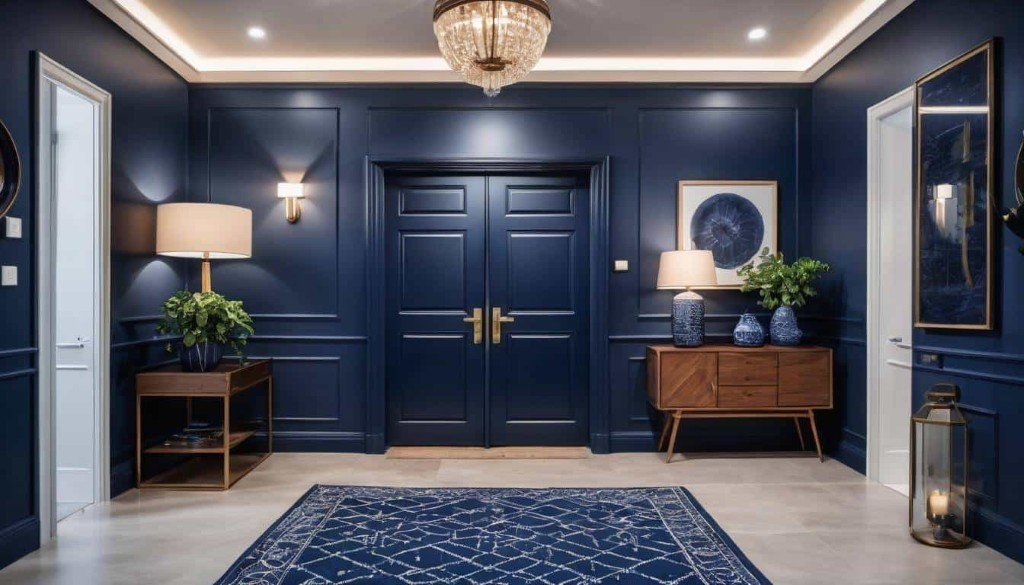
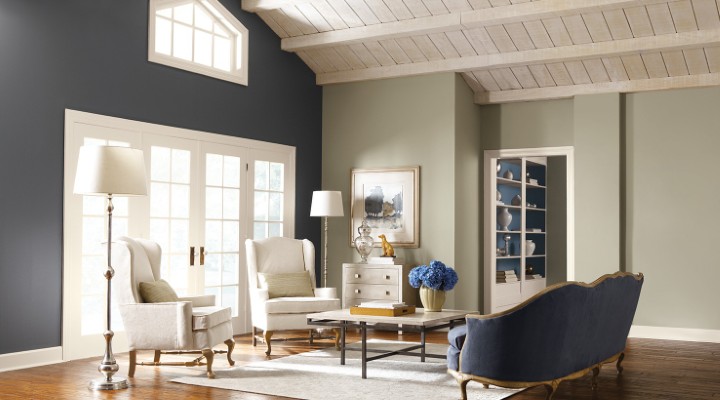
Cool colors serve a different psychological function. Deep navy, charcoal blue, and sage green act as emotional filters. They:
- Lower mental noise
- Encourage composure
- Signal order and calm
A cool-toned foyer is especially powerful for homes in busy neighborhoods. It creates a moment of decompression—a visual “reset button” after traffic, crowds, and noise.
The trick is depth. Pale cool colors can feel institutional in small spaces. Instead, lean into:
- Saturated hues
- Rich undertones
- Subtle variations in texture
A deep navy wall paired with brushed brass accents can feel luxurious rather than cold.
The Transition Rule: Visual Continuity Without Clashing
The foyer must negotiate multiple sightlines. Even if it’s bold, it cannot feel isolated.
To maintain harmony:
- Echo one color or material from adjacent rooms
- Keep undertones consistent (warm with warm, cool with cool)
- Avoid abrupt pattern shifts at doorways
The goal is not sameness, but conversation between spaces.
Strategic Lighting: Setting the Emotional Temperature
Lighting determines whether a foyer feels intentional or accidental. Too often, entryways are treated as purely functional zones with harsh overhead lighting. This is a missed opportunity.
Lighting in a foyer should sculpt mood, not just provide visibility.
The Role of Scale in Overhead Fixtures
In narrow or low-ceilinged foyers, oversized chandeliers can overwhelm. Instead of defaulting to statement pieces, consider proportion.
Flush-mount fixtures with sculptural forms can be just as expressive without consuming visual space. Look for:
- Organic silhouettes
- Textured glass
- Soft diffusion
In taller foyers, a vertical fixture can emphasize height and create drama—but restraint is key. Drama should feel intentional, not oppressive.
Layered Lighting: Designing for Time of Day
Relying on a single light source creates flatness. Layered lighting introduces depth and adaptability.
An ideal foyer lighting scheme includes:
- Overhead ambient lighting
- A secondary accent light (table lamp or wall sconce)
- Optional floor-level illumination for evening hours
A console lamp with a warm bulb instantly softens the space. It creates what designers often call the golden hour effect—a warm glow that feels human and lived-in.
Smart Dimming: Emotional Flexibility
Lighting should change with the day. Bright mornings require clarity; evenings call for softness.
Dimmers allow the foyer to:
- Welcome guests with warmth at night
- Feel energetic and fresh during the day
- Adapt to seasons naturally
The best foyers feel alive, not static.
The Mirror Effect: Expanding Space and Light
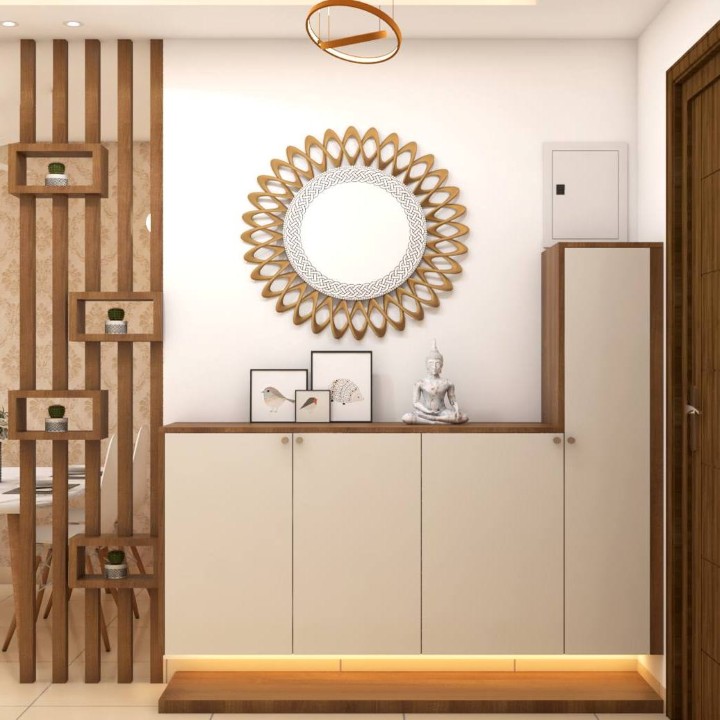
A mirror in an entryway is not decorative—it’s architectural.
Spatial Illusion in Compact Foyers
Mirrors manipulate perception. In narrow entryways, a large mirror:
- Doubles visual depth
- Reduces feelings of confinement
- Creates balance
Positioning matters. A mirror placed opposite the door captures daylight and redistributes it, brightening areas that would otherwise feel dim.
Reflecting Intention, Not Clutter
What a mirror reflects becomes part of the design. Avoid placing mirrors where they amplify disorder.
Instead, aim to reflect:
- Natural light
- Artwork
- Architectural features
A well-placed mirror turns a small foyer into an experience rather than a passage.
Curating an Entryway Gallery
Telling a Story Before a Word Is Spoken
Walls in foyers are often long, vertical, and ignored. Yet they are ideal storytelling surfaces.
An entryway gallery transforms movement into narrative.
Personalization: Identity at the Threshold
This is not the place for generic art. Entryway walls should reflect the people who live beyond them.
Ideal choices include:
- Family photographs with cohesive framing
- Travel mementos with emotional resonance
- Artwork that hints at passions or values
These elements quietly answer the question every visitor subconsciously asks: Who lives here?
Scale and Rhythm: Avoiding Visual Noise
A successful gallery balances variation and order.
Guidelines for cohesion:
- Limit the color palette of frames
- Mix large anchor pieces with smaller accents
- Maintain consistent spacing
Think of the wall as a composed rhythm, not a collage.
Bringing Life Indoors: The Botanical Touch
Designing Movement and Vitality
Plants introduce something architecture cannot: life.
Entryways often feel stagnant because they are static spaces. Plants add softness, motion, and organic unpredictability.
Choosing the Right Plants for Light Conditions
Many foyers lack natural light, but that doesn’t eliminate greenery as an option.
Low-light champions include:
- Snake Plants (architectural and resilient)
- ZZ Plants (glossy and forgiving)
- Pothos (trailing and adaptable)
These plants thrive on neglect and still offer visual vitality.
Scent as an Invisible Design Element
Certain plants contribute subtle fragrance. Eucalyptus, jasmine, or even fresh herbs near an entry introduce scent as part of the arrival experience.
Scent is deeply tied to memory. A natural aroma can become part of the home’s identity—far more powerful than synthetic sprays.
Designing the Moment of Arrival
A foyer is not about excess. It’s about intention.
When curated thoughtfully, it:
- Slows the pace of entry
- Signals care and awareness
- Sets the emotional tone for the entire home
The best foyers don’t shout. They invite. They whisper, you’re home now.
9 Design Archetypes for Every Home
Every home has a different architectural “soul.” Here are nine specific ways to execute your foyer transformation:
-
The Modern Farmhouse Entry (Chic & Simple)
The Farmhouse style isn’t just about “rustic” vibes; it’s about warmth through texture. * The DIY Element: A simple wooden bench with “X” frame legs.
The Palette: White-washed walls paired with matte black hardware.
Function: Use wire milk crates under the bench for a look that is both organized and airy.
-
The Rustic Retreat
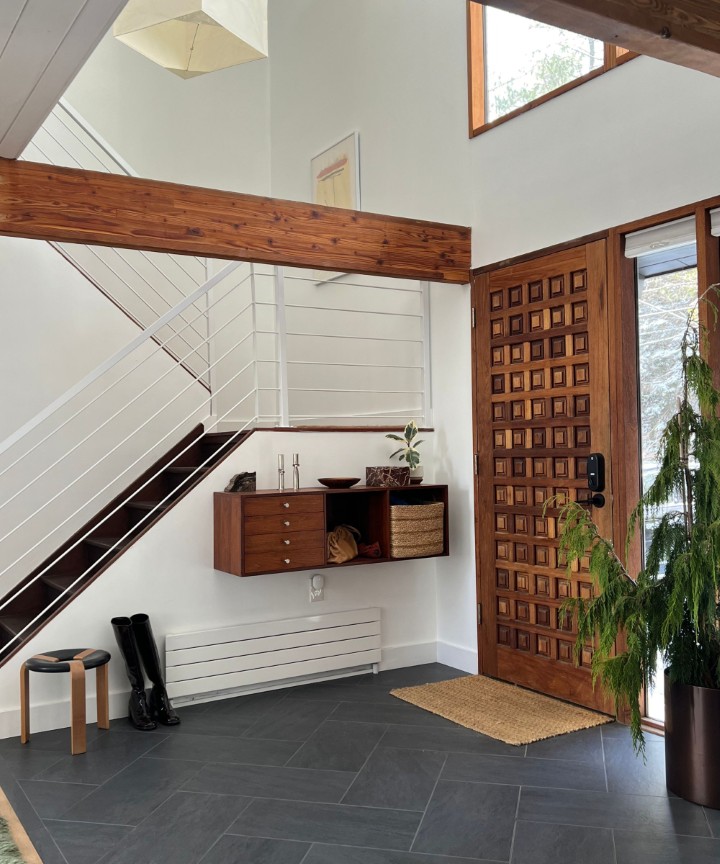
For those who want their home to feel like a cabin in the woods, the rustic foyer uses “heavy” materials like reclaimed wood and stone.
The Chat Spot: This design encourages a “short chat” zone. A heavy timber bench with wool-knit cushions creates a cozy nook for taking off boots or having a quick word with a neighbor.
-
The Cozy Cottage Mudroom
The “Cottagecore” aesthetic is perfect for small foyers that need to work hard.
Cap Stocks & Peg Rails: Instead of a bulky closet, use a classic peg rail (cap stock) across the wall. It’s a beautiful way to display hats and scarves as part of the decor.
Shoe Management: A low-profile bench with open space underneath keeps the floor clear while maintaining that “English countryside” charm.
-
The Chic Console Arrangement
The console table is the backbone of foyer design.
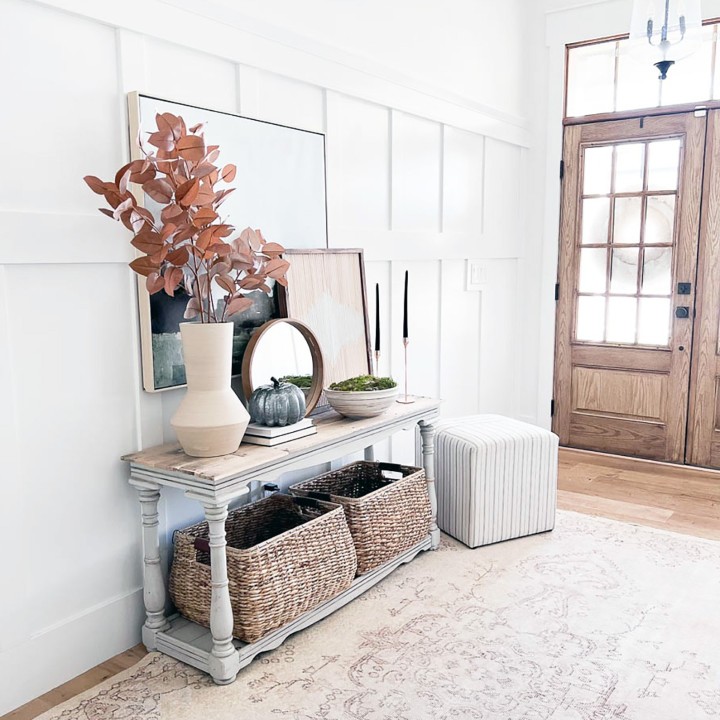
Styling the Surface: Follow the “Rule of Three.” Place one tall item (a lamp), one wide item (a tray for keys), and one organic item (a bowl of moss or a vase of flowers).
The Hidden Storage: Rattan baskets tucked under the table are the ultimate “clutter killers” for mail, dog leashes, and winter accessories.
-
Maximum Utility: The Storage Powerhouse
If your home lacks a closet, the foyer must become one.
The Bookshelf Hack: Turn a sturdy bookshelf on its side, add a custom foam cushion on top, and—presto—you have a storage bench.
Zoning: Give every family member their own “cubby” to ensure the morning rush is seamless.
-
The Classy Waiting Room (The Social Foyer)
In many cultures, the foyer is a semi-public space.
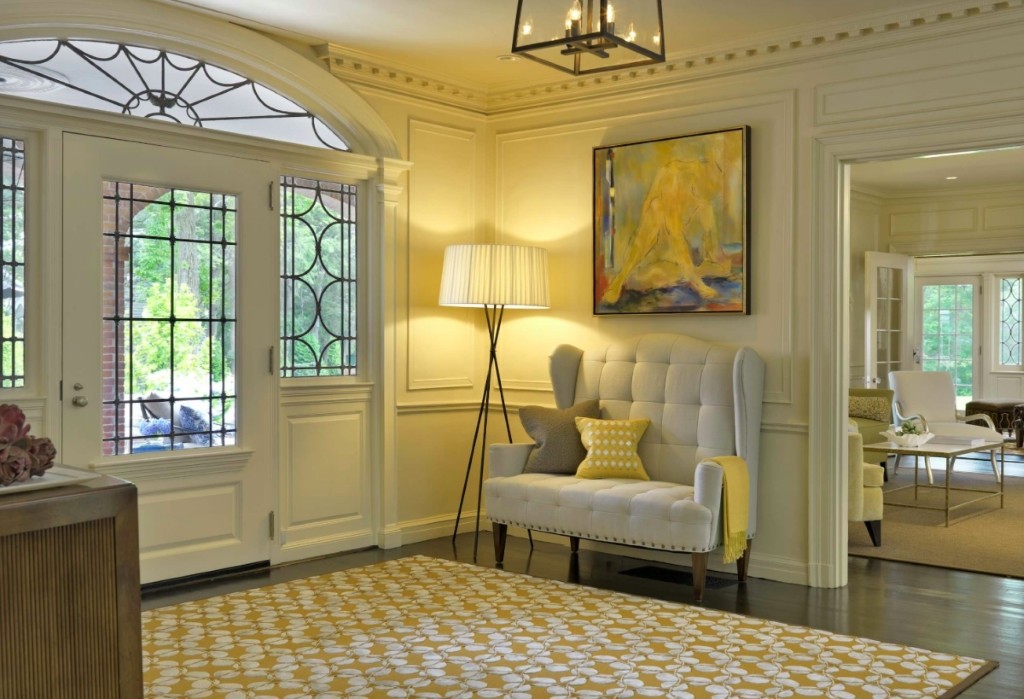
The Signature Area: For guests who aren’t staying for dinner (like a delivery person or a neighbor), two classic Windsor or velvet chairs offer a “dignified” place to wait. It shows that you value everyone who crosses your threshold.
-
The “Check-Point” Command Center
This is the functionalist’s dream. The foyer becomes your final “sanity check” before leaving.
The Drawer System: Use a small chest of drawers to store “on-the-go” essentials: lip balm, sunglasses, spare change, and tissues.
The Beauty Mirror: A well-lit mirror ensures you never leave the house with coffee on your shirt or messy hair.
-
The Textile Transformation: Rugs & Runners
A foyer without a rug feels unfinished and echoes unpleasantly.
Durability: Choose a “vintage-look” Persian rug or a jute runner. These hide dirt effectively and can withstand high foot traffic.
Visual Direction: A long runner draws the eye into the house, “pulling” guests toward the heart of the home.
-
The Gallery Walk-Through
If your foyer is more of a hallway than a room, lean into it.
- Lighting the Art: Install “picture lights” above your frames.
- The Wooden Bench: A slim, backless wooden bench provides a place to sit without blocking the visual flow of the artwork.
Conclusion: The Final Handshake — Where a Home Truly Begins
The foyer is not a room you use; it is a space you experience.
It is the only place in your home that exists entirely in transition—between outside and inside, between public and private, between the chaos of the world and the calm you are trying to preserve.
That is why poorly designed foyers feel unsettling, even when the rest of the house is beautiful. Your brain has not yet been told, “You’re home.”
A well-designed foyer functions like a handshake.
Not a rushed one, not an awkward one—but a confident, welcoming exchange that sets the tone for everything that follows.
Why the Foyer Carries Emotional Weight
When you arrive home, you are usually carrying more than bags.
You carry:
- Mental fatigue
- Sensory overload (noise, traffic, screens)
- Social roles you’ve been performing all day
The foyer is the psychological decompression chamber.
If it is cluttered, poorly lit, or undefined, your stress follows you deeper into the house. If it is calm, intentional, and legible, your nervous system begins to relax before you even take off your shoes.
Guests experience this too.
They may not consciously notice your foyer design, but they instantly feel:
- Whether the home is cared for
- Whether they are welcome or merely tolerated
- Whether they should relax or remain guarded
A foyer that works sends three silent messages:
- You belong here
- You are safe
- You can slow down now
This is not luxury.
This is respect—for yourself and for others.
From “Dead Space” to Emotional Infrastructure
Most foyers fail because they are treated as decorative leftovers.
A rug is placed because there’s empty floor.
A mirror is hung because someone said mirrors are good.
A console table exists but has no purpose.
A successful foyer is the opposite: it is designed backward from behavior.
You ask:
- What do I carry when I enter?
- Where do I naturally pause?
- What frustrates me the most when I come home?
- What do guests hesitate about when they enter?
When you answer those honestly, the design reveals itself.
The best foyers are not the biggest ones.
They are the clearest.
- Clear zones.
- Clear functions.
- Clear emotional cues.
The Long-Term Payoff of Getting It Right
Investing thought into your foyer pays dividends daily.
Over time, you will notice:
- Less mess creeping into the living room
- Fewer lost keys and forgotten items
- Quieter evenings because visual noise is contained
- Guests instinctively knowing where to stand, sit, or place belongings
Most importantly, your home starts working with you instead of against you.
And that is the real definition of good design.
Recommendations for Your Foyer Project (Expanded & Practical)
Designing a foyer doesn’t require a massive renovation or a designer budget.
It requires clarity, restraint, and intentional spending.
Below are structured, realistic recommendations you can apply immediately, regardless of home size.
-
Start Small — But Start Strategically
When people feel overwhelmed by design, they often freeze—or worse, buy random decor that creates more clutter.
Instead, start with two foundational elements:
- One grounding surface
- One defining gesture
The Rug: Your Visual Anchor
A foyer rug does more than protect flooring.
It tells the eye, “This is a place.”
What to prioritize:
- Durability (entry rugs take abuse)
- Texture (to absorb visual and literal dirt)
- Scale (too small = decorative, not functional)
| Rug Type | Ideal Use Case | Price Range (USD) |
| Flatweave (Cotton/Wool Blend) | Apartments, light traffic | $80 – $180 |
| Low-Pile Wool | Family homes | $180 – $450 |
| Indoor–Outdoor Synthetic | Pets, rain, mud | $60 – $150 |
| Vintage Wool (Secondhand) | Character-driven homes | $250 – $900 |
Pro Tip:
The rug should be large enough that both feet are on it when the door opens. Anything smaller becomes visual clutter.
Paint: The Cheapest Mood-Changer
Paint is the fastest way to shift a foyer from forgotten to intentional.
Instead of default white, consider:
- Soft clay
- Warm greige
- Muted olive
- Smoky blue-gray
These tones:
- Hide scuffs better
- Feel grounded
- Transition gently into living spaces
| Paint Type | Estimated Cost (Per Gallon) | Coverage |
| Standard Interior Latex | $30 – $55 | 350–400 sq ft |
| Washable / Scuff-Resistant | $45 – $75 | 350 sq ft |
| Premium Designer Paint | $80 – $120 | 400 sq ft |
One gallon is often enough for most foyers.
-
Audit Your Habits — Design Around Reality, Not Ideals
This is the step most people skip—and why their foyer never works.
The One-Week Observation Exercise
For seven days, do not change anything.
Simply notice:
- Where keys land
- Where shoes pile up
- Where mail gets dropped
- Where bags are leaned
Those spots are not mistakes.
They are data.
Design should follow behavior, not fight it.
Creating Functional “Landing Zones”
Every item you bring in needs a designated home within arm’s reach of the door.
| Item | Ideal Storage Solution | Cost Range |
| Keys | Wall hook or small bowl | $10 – $40 |
| Shoes | Open basket or shoe bench | $60 – $250 |
| Vertical wall sorter | $25 – $90 | |
| Bags | Sturdy hook or rail | $20 – $80 |
| Sunglasses | Shallow tray | $15 – $50 |
If an item does not have a home, it will migrate.
No amount of cleaning fixes that.
-
Invest in a Mirror — The Highest ROI Item
If your foyer lacks natural light, a mirror is not decorative—it is functional infrastructure.
Why Mirrors Matter More Than Artwork
A well-placed mirror:
- Doubles perceived light
- Expands visual depth
- Offers a final self-check before leaving
- Makes small foyers feel intentional, not cramped
Mirror Selection Guidelines:
- Height: Minimum 36–40 inches
- Shape: Rectangular for structure, round for softness
- Placement: Adjacent to light source or opposite doorway
| Mirror Type | Price Range | Best For |
| Framed MDF | $70 – $150 | Budget upgrades |
| Solid Wood Frame | $180 – $450 | Long-term investment |
| Vintage / Antique | $250 – $900 | Character homes |
| Full-Length Leaner | $150 – $400 | Narrow foyers |
Avoid mirrors that are too small—they feel apologetic.
-
Lighting: The Difference Between “Entry” and “Arrival”
Most foyers rely on one overhead light.
That’s a mistake.
A layered lighting approach transforms the emotional quality of the space.
Ideal Foyer Lighting Layers
- Ambient – General illumination
- Accent – Wall sconces or table lamps
- Reflective – Light bouncing via mirrors
| Lighting Element | Typical Cost | Notes |
| Flush Mount Ceiling Light | $60 – $200 | Choose warm bulbs (2700K) |
| Wall Sconce (Pair) | $120 – $400 | Creates intimacy |
| Table Lamp | $50 – $180 | Best for console tables |
| Smart Bulbs / Dimmers | $20 – $60 | Mood control |
Warm light slows the body down.
Cold light keeps it alert.
Choose accordingly.
-
Storage That Disappears (Visually)
The best foyer storage doesn’t look like storage.
Closed vs Open Storage Rule
- Open: Daily-use items (shoes, bags)
- Closed: Visual noise (umbrellas, clutter)
| Storage Type | Best Use | Price Range |
| Slim Console (with drawers) | Keys, mail | $120 – $400 |
| Storage Bench | Shoes | $150 – $450 |
| Tall Cabinet | Coats, bags | $250 – $900 |
| Floating Shelf | Small foyers | $40 – $120 |
If your foyer feels chaotic, it likely needs one more closed drawer.
-
Mudroom vs Gallery — A Lifestyle Decision, Not a Trend
This choice defines how your foyer behaves long-term.
Choose a Mudroom When:
- You have children
- You have pets
- You live in a rainy or dusty climate
- Shoes stay on indoors briefly
Choose a Gallery When:
- Household is adult-only
- Shoes are removed immediately
- Storage needs are minimal
- You entertain often
You can also hybridize:
- Mudroom storage below
- Gallery wall above
-
Personalize — Give the Space a Soul
Perfect foyers are forgettable.
Memorable foyers contain one unexpected element:
- A vintage hat
- A worn travel photo
- A sculptural object
- A family heirloom
This single item breaks the “catalog look” and tells a story.
Rule:
One odd item is intentional.
Five odd items is clutter.
Final Thought
A foyer is not about impressing others.
It is about creating a moment of pause—
a small ritual of arrival that reminds you:
This is where the world ends, and my life begins.
If you design that moment with care, your home will quietly support you every single day—without asking for attention, without demanding perfection.
And that is the mark of truly good design.