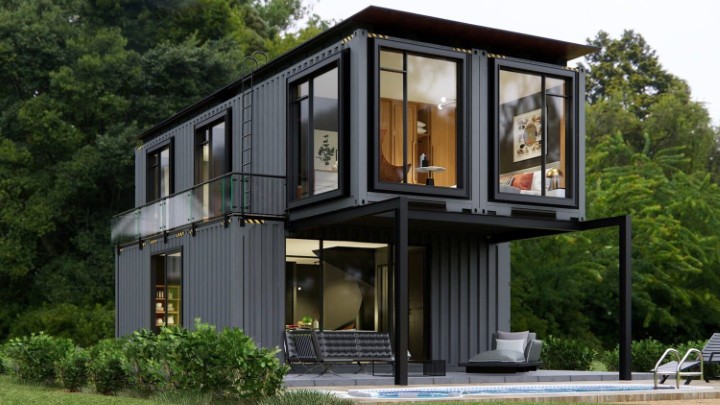
The Revolution of Upcycled Architecture
Are you looking for a great and truly transformative inspiration for your next home design? If you are, it is highly recommended that you consider the burgeoning world of container home floor plans. In an era where sustainability and affordability are no longer just trends but necessities, shipping container architecture—often referred to as “cargotecture“—offers a remarkable solution. Choosing a container home floor plan allows you to complete your home design in the best way possible, blending industrial strength with modern aesthetic sensibilities.
This specific genre of home design will definitely give a different and remarkable vibe to your living area. It challenges the traditional notions of “four walls and a roof” by utilizing intermodal steel containers as the primary structural element. Consequently, you will find a level of comfort and security that is unique to steel-frame living. Aside from the structural benefits, you will find that a well-executed floor plan can make your home look distinctive and jaw-dropping for everyone who sees it. Even better, there are diverse types of container home floor plans you can adopt, ranging from tiny solo retreats to expansive family mansions. If you want to find out how to turn these steel boxes into a sanctuary, keep reading as we explore the coolest designs in the industry today.
-
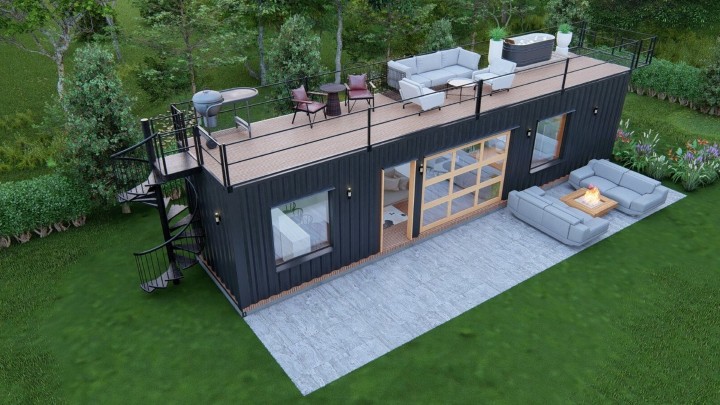
The Container Guesthouse: A Smart 2 × 40ft Strategy for Modern Living
Container architecture is no longer an experimental trend—it has evolved into a practical, cost-effective housing solution embraced by designers, developers, and homeowners worldwide. Among the many container home configurations available today, the 2 × 40-foot container guesthouse stands out as one of the most balanced and beginner-friendly designs.
This article provides a deep, human-centered exploration of the Container Guesthouse concept: what it is, why it works, when it makes sense to build one, and how much it truly costs. If you’re considering modular housing—whether as a guesthouse, rental unit, or independent living space—this guide is designed to answer your questions step by step.
What Is the 2 × 40ft Container Guesthouse?
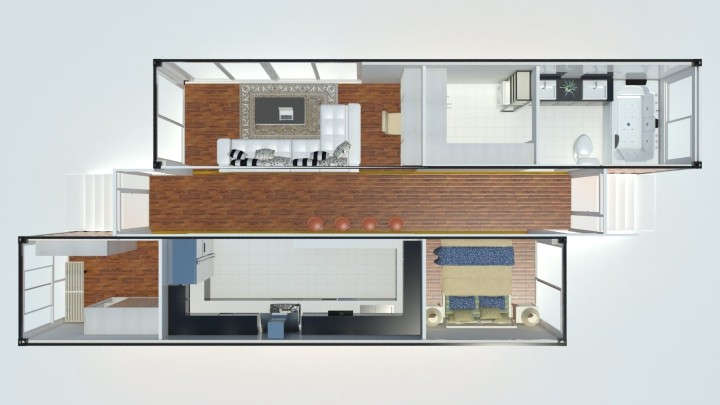
At its core, the Container Guesthouse is a modular residential structure built from two standard 40-foot shipping containers. Each container measures approximately 320 square feet, resulting in a total of 640 square feet of usable interior space before modifications.
While 640 square feet may sound modest on paper, smart spatial planning allows this layout to function as a fully livable home, typically including:
- A living and dining area
- One bedroom (or studio-style sleeping space)
- A full bathroom
- A functional kitchen
- Storage zones integrated into walls or furniture
The key to this design is how the containers are arranged, not just how many are used.
Why Two 40-Foot Containers Work So Well
-
Ideal Balance Between Size and Simplicity
For people entering the world of container homes, smaller builds (like a single 20-ft container) can feel too restrictive, while larger multi-container homes introduce structural complexity and higher costs.
The 2 × 40ft configuration sits in the sweet spot:
- Large enough to feel comfortable and permanent
- Small enough to remain affordable and manageable
- Flexible enough for multiple layout styles
This balance makes it especially appealing for:
- First-time container home builders
- Guesthouse projects
- Airbnb or short-term rentals
Backyard ADUs (Accessory Dwelling Units)
-
Flexible Layout Options: Side-by-Side or L-Shape
There are two primary layout strategies commonly used:
Side-by-Side Configuration
- Containers are placed parallel to each other
- Creates a wide, open interior when the shared wall is removed
- Ideal for open-plan living rooms and kitchens
L-Shape Configuration
- Containers meet at a right angle
- Creates natural zoning between public and private spaces
- Perfect for patios, courtyards, or outdoor living areas
Both layouts allow designers to break away from the “boxy” feel that container homes are often criticized for.
Maximizing Interior Volume: Making 640 Sq Ft Feel Bigger
The Psychological Challenge of Steel Boxes
Shipping containers were designed to transport cargo—not humans. Without thoughtful design, they can feel narrow, dark, and confined. This is where intelligent architectural decisions matter.
Floor-to-Ceiling Windows: The Game Changer
One of the most effective ways to transform a container guesthouse is by installing large, floor-to-ceiling windows. These serve multiple purposes:
- Flood the interior with natural light
- Create visual continuity with outdoor space
- Reduce the feeling of confinement
- Enhance the perceived square footage
When paired with minimalist furniture and light interior colors, the space feels dramatically larger than its actual footprint.
Ceiling Height and Structural Modifications
Standard shipping containers have interior heights of around 8.5 feet, which is acceptable but can feel tight once insulation and ceiling finishes are added.
Many high-quality builds include:
- Slight roof raises
- Exposed steel beams
- Vaulted or sloped ceilings
These features improve airflow, aesthetics, and overall comfort.
Energy Efficiency: Why Container Guesthouses Can Be Surprisingly Sustainable
Passive Solar Design Explained
Passive solar design refers to positioning windows and openings to capture heat from the sun during colder months while minimizing heat gain in warmer seasons.
When windows are:
- South-facing (in the Northern Hemisphere)
- Properly shaded with overhangs
- Combined with thermal insulation
The home can significantly reduce its reliance on heating systems.
Insulation: The Real Key to Efficiency
Steel conducts heat extremely well—which is a disadvantage without proper insulation.
High-quality container guesthouses typically use:
- Closed-cell spray foam insulation
- Rigid foam panels
- Thermal breaks between steel and interior walls
When done correctly, container homes can meet or exceed traditional residential energy standards.
Lower Monthly Utility Costs
Because of their compact size and efficient design, container guesthouses often result in:
- Reduced heating and cooling costs
- Lower lighting energy usage
- Smaller HVAC system requirements
Over time, this translates into long-term savings, not just lower upfront costs.
Cost Breakdown: How Much Does a 2 × 40ft Container Guesthouse Really Cost?
One of the most common misconceptions is that container homes are always “cheap.” In reality, they are cost-efficient, not necessarily low-cost. Quality depends on materials, labor, and local regulations.
Below is a realistic cost breakdown.
-
Shipping Containers
- Used 40-ft containers (good condition): $3,000 – $5,000 each
- New or “one-trip” containers: $6,000 – $9,000 each
- Estimated total: $6,000 – $18,000
-
Site Preparation and Foundation
- Land clearing and leveling
- Concrete pier or slab foundation
- Estimated cost: $8,000 – $20,000
-
Structural Modifications
- Cutting walls for windows and doors
- Reinforcing removed steel sections
- Welding and framing
- Estimated cost: $15,000 – $30,000
-
Insulation and Interior Framing
- Spray foam insulation
- Interior wall framing and drywall
- Estimated cost: $10,000 – $18,000
-
Windows and Doors
- Floor-to-ceiling glass panels
- Energy-efficient glazing
- Estimated cost: $12,000 – $25,000
-
Plumbing and Electrical Systems
- Full bathroom installation
- Kitchen plumbing
- Electrical wiring and panel
- Estimated cost: $15,000 – $30,000
-
Interior Finishes
- Flooring
- Cabinets and countertops
- Paint and fixtures
- Estimated cost: $12,000 – $25,000
-
Permits, Design, and Contingency
- Architectural plans
- Permits and inspections
- Unexpected costs
- Estimated cost: $10,000 – $20,000
Total Estimated Cost
$100,000 – $175,000, depending on:
- Location
- Labor rates
- Material quality
- Design complexity
This range reflects a high-quality, code-compliant build, not a DIY shortcut project.
Why This Is Still Cheaper Than Traditional Construction
A conventional 600–700 sq ft guesthouse built using standard methods often exceeds $300,000 once labor, materials, and permits are factored in.
Container guesthouses reduce costs through:
- Faster construction timelines
- Reduced framing requirements
- Modular efficiency
The result is financial flexibility without sacrificing livability.
When Does a Container Guesthouse Make Sense?
This strategy is ideal when:
- You want a secondary dwelling on your property
- You’re building an Airbnb or rental unit
- You need a private guesthouse or office
- You want modern architecture without excessive cost
It is especially attractive in regions with high housing prices and limited space.
A Smart Step Into Modular Living
The 2 × 40ft Container Guesthouse is not just a design trend—it’s a thoughtful response to modern housing challenges. It combines affordability, sustainability, and architectural creativity into a compact yet comfortable living solution.
For beginners in modular construction, this approach offers:
- Manageable scale
- Predictable costs
- High resale and rental appeal
When executed properly, it proves that small homes can deliver big value—both financially and experientially.
2: The Aquatic Retreat—The Container House on Water
The second container home floor plan that represents a feat of engineering and imagination is the Container House on Water. This is an excellent choice for those who desire a unique impression and a deep connection with nature, particularly if you have access to a riverside or lakeside plot.
Harmonizing with the Landscape
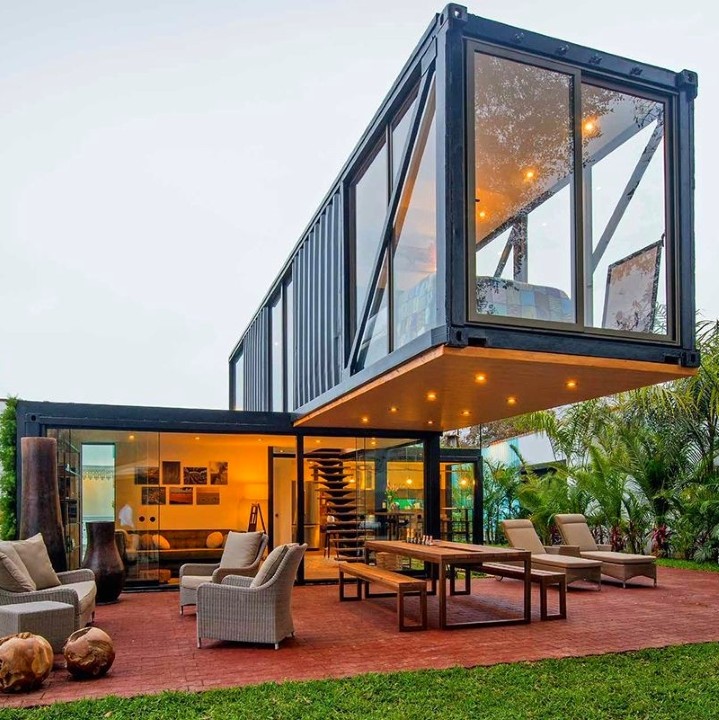
The exterior of this home is designed to increase the beauty of the waterfront view. To achieve this, builders typically use about six metal containers placed side-by-side or stacked in a staggered formation. This layout creates multiple “decks” or lookout points over the water.
Critical Construction Considerations
When building near water, you must never forget the importance of the foundation. These homes are best built on the top of a “greenfield” or a reinforced pier system. For example, in rugged coastal areas like Scotland, these homes are often anchored to the rock to withstand high winds. It is important to note: do not try to make this kind of home directly on a sandy shore without an engineered foundation, as the construction will not suit the shifting soil. Instead, focus on elevated pilings that allow the water to move beneath the structure safely.
3: The Small Container House (A Masterclass in Minimalism)
The third option is the Small Container House, which is a spectacular choice for individuals or couples who want a simple, low-maintenance living area.
The 1,517 Square Foot Miracle
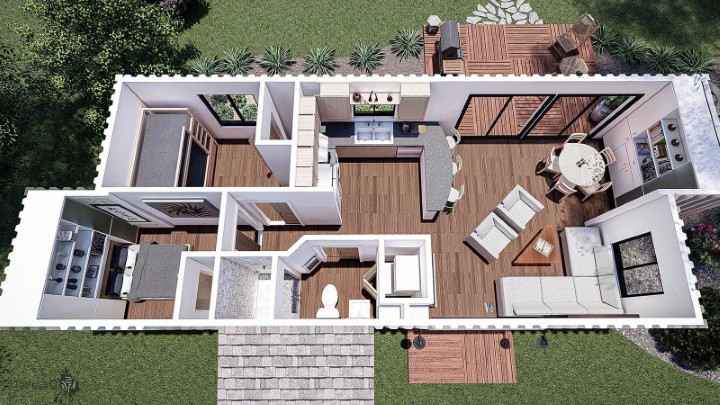
In order to build this specific model, you actually need two to three containers that can be joined to cover approximately 1,517 square feet of living space. This measurement is the “sweet spot” for modular living. It is large enough to comfortably fit:
- Two full-sized bedrooms.
- A modern bathroom with full utilities.
- A dedicated home office (perfect for the remote work era).
- A full kitchen and a compact laundry room.
The Open-Concept Movement
You can make the interior feel significantly more spacious if you connect the rooms without any traditional dividing walls. An open-space design allows you to move freely and ensures that light reaches every corner of the home. Currently, it takes about $265,475 to bring this specific plan to life. While that may seem high for a “small” house, this estimated cost includes the permitting, professional planning, architectural design, high-end materials, and specialized labor required for steel modification.
4: The White Container House—The Aesthetic Modernist
If you prioritize visual impact and “Instagrammable” design, the White Container House is a fabulous floor plan that you cannot ignore. This design emphasizes the aesthetic and modern style of modular architecture.
Creating an Artistic Impression
The White Container House often features white-cladded exteriors that hide the corrugated metal, giving it a sleek, high-end gallery look. To take it to the next level, designers often create asymmetrical angles. By stacking containers at 90-degree angles or creating overhangs that serve as carports or balconies, you create a home that is an artistic masterpiece.
Technical Foundations: Insulation and Wiring
When designing this house, you must ensure you manage the electrical wires and insulation as early as possible. Because steel is an excellent conductor of heat and cold, high-performance spray foam insulation is a must. This ensures that your artistic white home remains comfortable year-round. Despite its luxury appearance, because you are using the container as the structural “skeleton,” you can still achieve this look at a more inexpensive cost than custom-built concrete or timber-frame modernism.
5: The Big Metal Container House—The Family Estate
Last but not least, the Big Metal Container House is a brilliant idea for those who refuse to compromise on space. This plan is for the homeowner who wants their container home to be as large and functional as a traditional suburban estate.
Scaling Up with Multi-Container Layouts
In this design, you use five or more containers to create a massive footprint. This allows for a full suite of spacious rooms:
- Multiple master bedrooms and guest suites.
- A grand living room with double-height ceilings (achieved by removing the floor of an upper container).
- A multi-car garage, a kitchen with a walk-in pantry, and a dedicated cinema room.
The Importance of Professional Partnership
Because of the complexity of stacking multiple heavy steel units, it is a must to hire experts. A structural engineer and a specialized container contractor will be the right partners to discuss your vision with. They will ensure that the “Big Metal” house is structurally sound, properly vented, and flawlessly integrated. This design proves that container living is not just for “tiny house” enthusiasts; it is a viable, high-end alternative for luxury family living.
6: Why the Floor Plan is the “Heart” of the Build
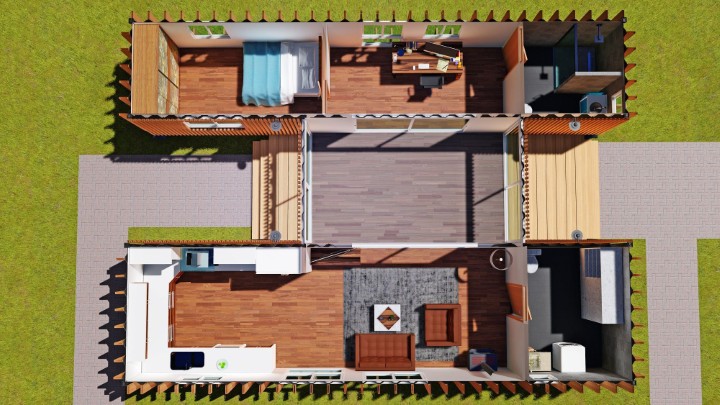
Whether you choose a guesthouse or a mansion, the floor plan is where the success of your project is decided. Unlike traditional lumber construction, you are working with fixed dimensions (usually 8 feet wide). This requires a “mathematical” approach to furniture and hallway placement.
Managing Traffic Flow
A good container floor plan ensures that the “private” zones (bedrooms) are separated from the “social” zones (kitchen/living) even within a narrow frame. This is often achieved by placing the social areas in the center where the two containers meet, creating a double-wide space, while keeping the bedrooms at the distant ends of the containers.
7: Technical Deep-Dive—Foundation and Insulation
To make your container home truly “cool” and comfortable, you must look beyond the floor plan and into the technical execution.
Foundation Types
- Slab-on-Grade: Perfect for flat land and the “Small Container House” design.
- Pier Foundation: Essential for the “House on Water” or uneven terrain. This is the most popular for containers because it is cost-effective and allows for easy access to plumbing beneath the unit.
- Strip Foundation: Best for the “Big Metal” designs that require heavy weight-bearing walls.
The Science of Comfort
Insulating a container is non-negotiable. Most experts recommend Closed-Cell Spray Foam. It acts as a vapor barrier and has a high R-value per inch, which is critical when you only have a few inches of wall space to work with. Additionally, consider “Cool Roof” paint for your White Container House to reflect UV rays and keep the interior cool during the summer.
8: Legalities and Zoning (The Professional Step)
Before you finalize your cool container homes floor plan, you must investigate local zoning laws. Not all municipalities are “container-friendly” yet.
Navigating Permits
You will need to ensure that your design meets the International Residential Code (IRC). In some areas, container homes are classified as “Modular Homes,” while in others, they are “Stick-built” equivalent. Having a professional floor plan with an engineer’s stamp will significantly speed up the permitting process and ensure that your home is legally recognized and insurable.
9: The Interior Design—Industrial vs. Organic
The interior of your container home should complement the floor plan.
- The Industrial Look: Leave some of the corrugated steel walls exposed and painted to celebrate the home’s origin. Pair this with polished concrete floors.
- The Organic Look: Use wood cladding on the interior walls to soften the space. This is highly recommended for the “Small Container House” to make it feel warmer and more traditional.
10: Future-Proofing Your Home
Container homes are naturally modular. One of the best features of a container floor plan is that it is “expandable.” If you start with a Small Container House and your family grows, you can simply “plug in” another 20-foot or 40-foot container later. This flexibility makes container homes a smart long-term investment for the modern, unpredictable world.
Conclusion and Recommendation: Turning the Vision into Reality
In conclusion, choosing a container home floor plan is an inspiring journey toward a more sustainable and distinctive lifestyle. Whether you are drawn to the affordability of the Container Guesthouse, the unique impression of the House on Water, the minimalist efficiency of the Small Container House, the artistic flair of the White Container House, or the grand scale of the Big Metal Container House, there is a design out there that will suit your needs perfectly.
By managing your space wisely, hiring the right experts, and paying close attention to technical details like insulation and foundation, you will find that your container home stands out on another level entirely. It will not only provide a comfortable and jaw-dropping living area but also serve as a testament to your creativity and commitment to modern design. Don’t wait any longer—take these cool ideas, discuss them with a professional, and start the process of creating the remarkable container home you have always dreamed of.