The Evolution of the Farmhouse Aesthetic
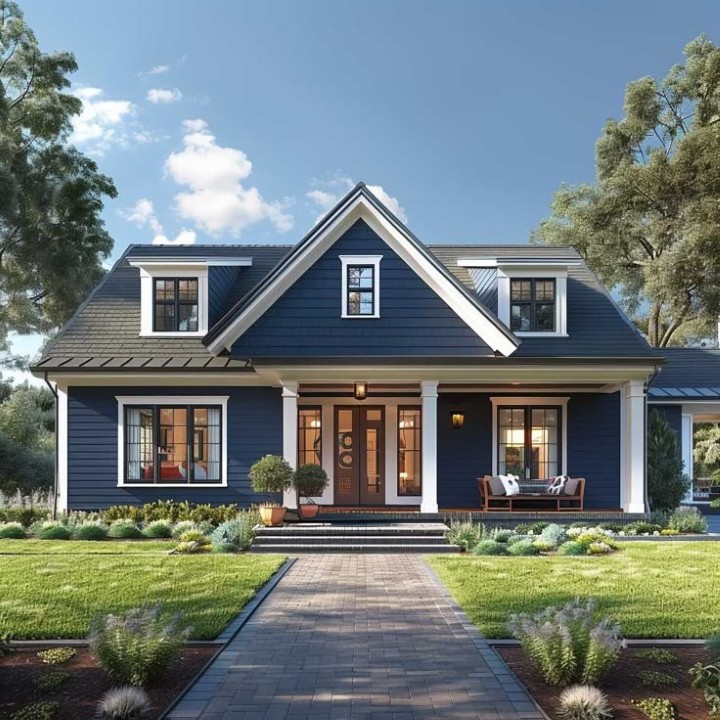
In the world of residential architecture, few styles have captured the public imagination quite like the modern farmhouse. It is a design language that speaks of heritage, simplicity, and a deep connection to the land, while simultaneously embracing the sleek, minimalist lines of 21st-century modernism. It does not matter what kind of house style you currently have; the color is the most critical element to highlight.
The reason for this is very clear: color is the first thing the human eye perceives. A different color combination will generate a vastly different impression. Some combinations will make your house look significantly better—more expensive, more inviting, and more balanced—while others might feel awkward or disjointed. This is why, regardless of the specific architectural nuances of your home, you must choose your exterior color combination with extreme care. If you have a modern farmhouse and are looking for the best way to redefine its presence, exploring advanced color palettes is your first step. Below, we analyze the most effective and sophisticated modern farmhouse exterior color combinations available today.
-
The “Black on Black” Revolution: Moody Modernism
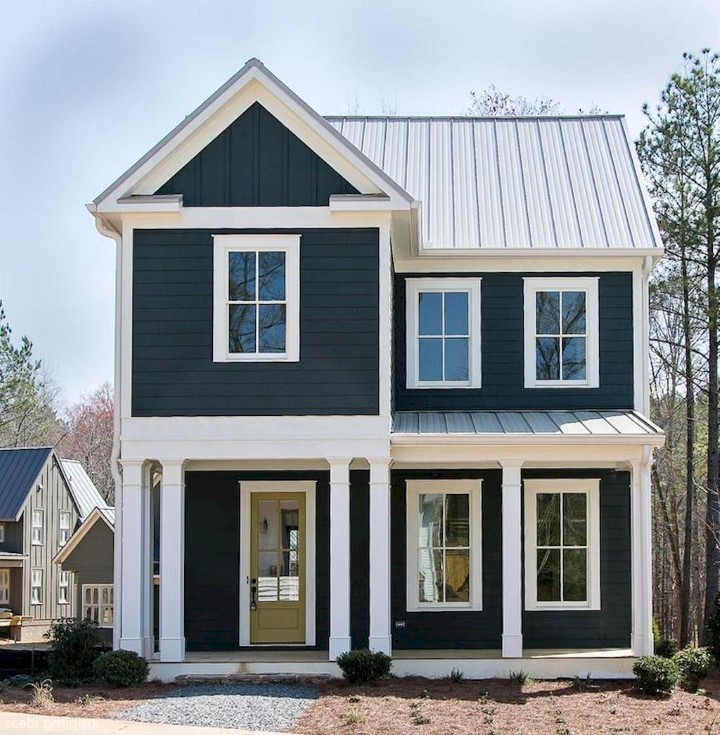
For decades, the farmhouse was synonymous with white siding. However, a bold new trend has emerged: the monochromatic dark exterior. Who said that black should always be matched with white? While that high-contrast look is common, it is by no means an absolute rule.
Achieving the Layered Dark Look
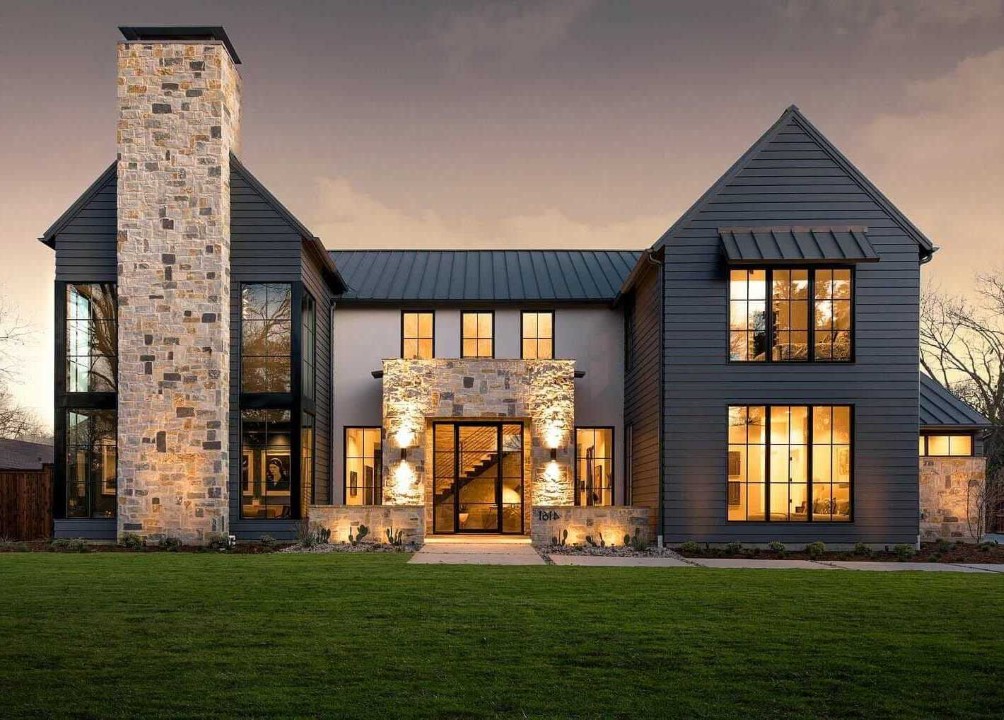
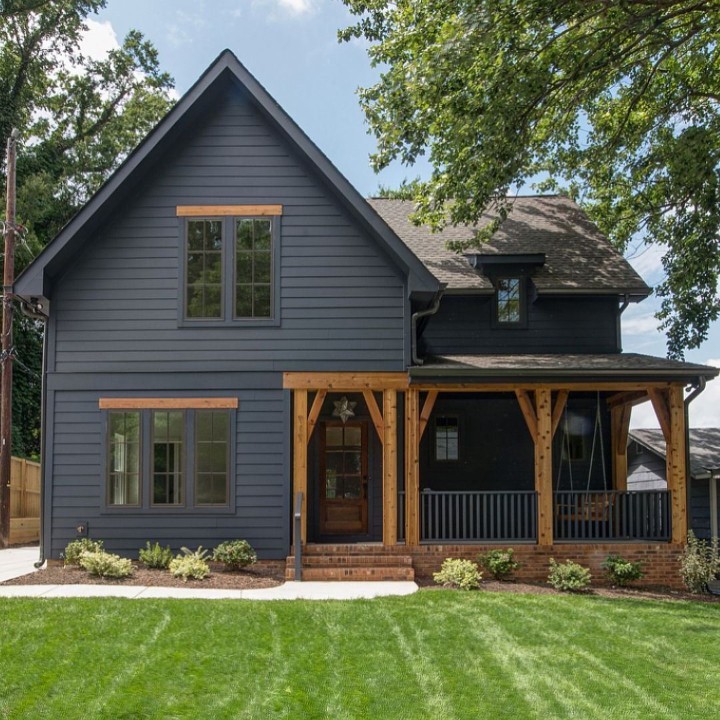
To realize a successful “Black on Black” exterior, you need more than just one bucket of paint. The key is to use two different shades of black to create depth. You need a “softer” black, such as a deep charcoal or obsidian with a matte finish for the primary siding, and a “darker,” more saturated black for the trim, window frames, and doors. This tonal layering prevents the house from looking like a flat, featureless void.
Strategic Highlights
If you want to highlight the farmhouse roots of your house, you can pair this dark exterior with a modern farmhouse open floor plan that features limestone or light-colored stonework near the foundation. This simple contrast highlights the “heaviness” of the dark paint against the “earthiness” of the stone. Do not be afraid to go dark; when executed with different textures, a black farmhouse is a jaw-dropping statement of modern luxury.
-
The Modern British Style: Sophisticated Heritage
The United Kingdom has long been a source of inspiration for rural architecture. British farmhouses often blend the ancient with the contemporary in a way that feels effortless. Their color combinations are specifically designed to make the farmhouse look more modern without losing its historic soul.
The Three-Color Formula
To replicate this look, you only need three primary colors:
- Bianca Peak: This is a shaded white, often possessing a slight gray or “stone” undertone. It serves as the primary wall color, providing a clean look that is less harsh than pure white.
- Onion Skin Tan: This is a warm, earthy tan used for wooden accents, such as exposed beams, shutters, or even the roof shingles. It brings an organic, natural element to the design.
- Satin Black: This provides the “modern” edge. Satin black should be used for the metalwork—gutters, downspouts, and thin window mullions.
In the British style, the satin black should dominate the accents over the tan, providing a crisp frame for the softer wall colors.
-
The Warm Modern Exterior: The Cottage Hybrid
There is a growing movement of homeowners turning their farmhouse aesthetic into something that leans toward a “cottagecore” or high-end cottage style. While these two styles are distinct, you can add touches of cottage warmth to a farmhouse through the clever use of walnut tones.
The Power of Walnut and Linen
The color of walnut gives an immediate impression of warmth and stability. Combining this rich wood tone with a Bleached Linen color for the siding creates a perfect modern farmhouse exterior. Using bleached linen is a strategic choice; it provides a soft contrast to the walnut while staying within the same warm color family.
Final Touches
To prevent the house from looking too “rustic,” you need a finishing touch of dark charcoal for the accents. Dark charcoal fits the need perfectly because it provides a bridge between the organic wood and the modern paint, grounding the entire design in a sophisticated way.
-
Beige Beauty: The Art of Subtle Neutrality
Beige is a color that many people love, yet many struggle to use correctly. If you have planned a modern farmhouse open floor plan and intend to paint the entire exterior a single shade of beige, you should pause.
Beyond the “Bland”
Coloring a farmhouse entirely in one shade of beige often results in a dated, “muddy” look. Instead, you should combine multiple colors to generate a beige impression.
- The Foundation: Start by painting the main walls a crisp, warm white.
- The Highlight: Use a “milestone” or light taupe color for accents on the flooring, porch, or stone veneers.
- The Contrast: Use a darker black or deep bronze for the final touches on the window frames and light fixtures.
This combination creates a “Beige Beauty” effect through layering rather than a single flat coat of paint, making the house look multi-dimensional and expensive.
-
The Bright and Light Farmhouse: Frosty Perfection
For those who want to keep the classic “Light Farmhouse” look but want it to feel current, the “Frosty” palette is the answer. This is about taking the classic farmhouse and moving it into a “Cool” (blue/gray undertone) spectrum rather than a “Warm” (yellow/red undertone) one.
Mastering the Frosty Tone
You can start with a White Frosty color for the main siding. This is a white that feels icy and sharp. To prevent the house from looking washed out, you must shade the frosty color with a Matte Steel or slate gray. Knowing which areas to shade is vital—usually the gables, the porch ceiling, or the secondary siding sections.
Avoiding the Black Trap
For the finishing accents, avoid using a harsh, dark black. Instead, find a softer shade, like a midnight blue or a deep pewter. This maintains the “Light and Bright” theme without the jarring contrast of a true black, resulting in a modern farmhouse that feels airy and ethereal.
-
The Modernity-Featured Farmhouse: High-Contrast Classics
Some homeowners focus less on the paint and more on the features—large glass windows, metal roofs, and industrial lighting. While these features are important, they still require the right modern farmhouse open floor plan and color palette to succeed.
The “Safe” but Stunning Trio
If you have modern features to highlight, you cannot go wrong with the “High-Contrast Trio”:
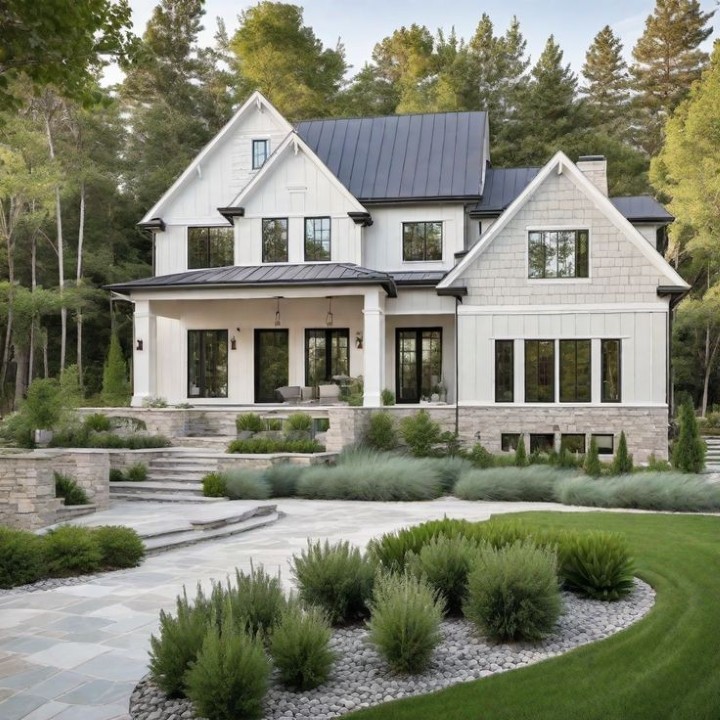
- Bright White: For the main body, reflecting the sun and highlighting the home’s silhouette.
- Shaded Gray: For the secondary structures or the roof.
- Darker Black: For the hardware, windows, and doors.
This combination acts as a neutral canvas that allows your “modern features” (like a glass-heavy entryway) to take center stage.
-
The Brown Tone Modern Farmhouse: Earthy Sophistication
Some may think the brown tone is too similar to the “Warm Modern” style, but the execution is quite different. While the warm modern style uses wood, the brown tone farmhouse uses paint and masonry to achieve an earthy look.
Avoiding White
In this palette, you should actually avoid using pure white. Instead, choose a Soft Cream or “Skin Tone” color as your base. This provides a much richer, more historic feel. For the accents, choose colors that mimic natural elements, such as Brown Brick or Cliff Rock (a dusty, brownish-gray).
One essential rule for the brown-tone farmhouse: Avoid using black. Black is too modern and sharp for this earthy palette. Instead, use a deep espresso or a dark walnut brown for your darkest accents to maintain the organic flow of the home.
-
Technical Considerations: Light Reflectance Value (LRV)
When choosing your modern farmhouse colors, you must consider the Light Reflectance Value (LRV). This is a scale from 0% (absolute black) to 100% (pure white) that measures how much light a color reflects.
- White Farmhouses: Usually have an LRV between 75 and 85.
- Black Farmhouses: Usually have an LRV between 5 and 10. Keep in mind that very dark colors (low LRV) will absorb more heat, which can increase cooling costs in the summer and may cause some types of siding (like vinyl) to warp if not properly ventilated.
-
Texture and Materiality in Farmhouse Design
Color does not exist in a vacuum; it is influenced by the texture of the material it is applied to.
- Vertical Board and Batten: This is the “signature” farmhouse siding. Dark colors look particularly striking on vertical lines because the shadows in the “battens” create a sense of height.
- Horizontal Lap Siding: Best for lighter colors like Frosty White or Bleached Linen, providing a traditional, grounded look.
- Stone Veneer: When using colors like “Milestone” or “Cliff Rock,” ensure the stone has a mix of the colors found in your paint palette to tie the whole design together.
-
The Importance of the “Fifth Wall”: The Roof
- A modern farmhouse is defined by its roofline. Whether you choose a classic shingle or a modern standing-seam metal roof, the color must be integrated into your palette.
- Metal Roofs: Usually look best in Satin Black or Matte Steel.
- Shingle Roofs: Look best in Weathered Wood or Charcoal. The roof color should generally be the darkest or second-darkest color in your entire exterior combination.
Recommendations for a Perfect Modern Farmhouse Exterior
Choosing the right exterior color for your home is not a small decision. It is a long-term investment that affects not only your home’s curb appeal, but also its perceived value, personality, and harmony with the surrounding environment. For a modern farmhouse, color selection becomes even more critical because this architectural style relies heavily on contrast, balance, and subtle sophistication. A poor color choice can make a modern farmhouse feel flat or unfinished, while the right palette can elevate it into a timeless, magazine-worthy home.
In this guide, we will explore practical, experience-based recommendations to help you achieve a perfect modern farmhouse exterior. From understanding light conditions to coordinating with landscaping, every detail plays a role in creating a cohesive and human-centered design that meets quality standards for long-term living and Google AdSense–friendly content.
Why Color Matters So Much in a Modern Farmhouse
The modern farmhouse style blends traditional rural charm with clean, contemporary lines. Unlike overly ornate architectural styles, modern farmhouses often feature large wall surfaces, simple rooflines, and minimal decorative details. Because of this simplicity, color becomes the main storytelling element.
Exterior paint defines how your home is perceived from the street. It can make a structure feel warm and welcoming, bold and dramatic, or light and refreshing. Neutral tones dominate modern farmhouse design, but “neutral” does not mean boring. Subtle undertones, layered contrasts, and thoughtful accents are what separate a well-designed farmhouse from a generic one.
When chosen carefully, exterior colors also influence:
- How large or small your home appears
- How well it blends with natural surroundings
- How long it looks clean and well-maintained
- How timeless it will feel after 10 or even 20 years
Test Colors in Different Light Conditions
One of the most common mistakes homeowners make is choosing paint colors based on a small sample card under artificial store lighting. Exterior colors behave very differently once exposed to natural light, shadows, and surrounding materials.
To avoid costly mistakes, always test your paint choices properly:
- Paint a large sample board (at least 2×2 feet, preferably larger)
- Place the board against different sides of your house
- Observe it in the morning, midday, and late afternoon
- Pay attention to how shadows and reflections affect the color
Soft whites like Blanca Peak or warm neutrals such as Bleached Linen can appear creamy in the morning, stark at noon, and muted by sunset. Cooler tones may look elegant in shade but overly bright in direct sunlight. Testing allows you to see how the color truly behaves in real-world conditions.
This step alone can save you thousands of dollars and prevent disappointment after the paint is already applied.
Consider the Neighborhood Context
A modern farmhouse should feel distinctive, but it should never feel disconnected from its surroundings. Your home is part of a larger visual environment, and successful exterior design respects that context.
Before finalizing your color scheme, take time to observe:
- Nearby homes and their dominant color palettes
- Roof colors in your neighborhood
- Architectural styles around you
- Natural elements such as trees, hills, or open land
For example, a dramatic Black-on-Black modern farmhouse can look stunning in a rural or wooded setting where dark tones echo tree trunks and shadows. However, the same palette may feel overpowering in a tight suburban cul-de-sac filled with light-colored homes.
The goal is not to blend in completely, but to create a visual conversation. Your home can stand out through refined contrast and material choices rather than extreme color differences.
Coordinate with Landscaping and Nature
Landscaping is not an afterthought—it is a core component of your exterior color strategy. The plants, lawn, trees, and seasonal changes around your home all interact with your paint choices.
Here’s how to think about color in relation to landscaping:
- Green surroundings: Light and bright farmhouse exteriors pop beautifully against lush green lawns and hedges.
- Autumn-heavy areas: Brown-toned or warm neutral farmhouses pair exceptionally well with fall foliage.
- Minimal landscaping: Darker or higher-contrast palettes can add visual interest when greenery is limited.
- Evergreen landscapes: Soft whites and muted grays maintain balance year-round.
A well-coordinated exterior looks intentional in every season, not just summer. When your paint color complements nature, your home feels grounded and harmonious rather than artificial.
Choose the Right Finish for Large Surfaces
Modern farmhouses often feature expansive wall areas with minimal trim interruptions. This means paint finish quality matters just as much as color.
For best results:
- Avoid high-gloss finishes on large exterior walls
- Choose low-lustre or satin finishes
- Ensure proper surface preparation before painting
Low-lustre and satin finishes provide a subtle glow without emphasizing imperfections. They also resist dirt and moisture better than flat finishes, making them ideal for exterior use.
Because imperfections are more visible on large, uninterrupted surfaces, investing in premium-quality exterior paint is essential. Cheap paint may save money initially but often leads to uneven fading, streaking, or peeling within a few years.
Popular Modern Farmhouse Exterior Color Approaches
While personal taste matters, certain color approaches have proven timeless in modern farmhouse design:
-
Black on Black
Bold, dramatic, and architectural. This look works best in open or natural settings and pairs well with wood accents and metal roofing.
-
Modern British-Inspired Neutrals
Soft grays, warm taupes, and muted stone tones create a refined, sophisticated farmhouse that feels both classic and modern.
-
Bright and Light Farmhouse
Clean whites with subtle warm undertones deliver an airy, welcoming appearance that enhances curb appeal and resale value.
Each approach can be customized with accent colors on doors, windows, or trim to add personality without overwhelming the structure.
Balancing Primary, Secondary, and Accent Colors
Successful exterior design relies on balance. Think of your color scheme in three layers:
- Primary color: The main body of the house
- Secondary color: Trim, siding variation, or architectural elements
- Accent color: Doors, shutters, or metal details
A modern farmhouse typically uses restrained accents—often black, charcoal, or natural wood—to add contrast without visual clutter. When these layers work together, the home feels cohesive and intentional.
Conclusion: Creating a Timeless Modern Farmhouse Exterior
In conclusion, designing the perfect modern farmhouse exterior is a thoughtful process, not a rushed decision. Color selection plays a defining role in how your home is experienced, remembered, and valued over time.
Whether you choose a moody Black-on-Black palette, a refined modern British–inspired neutral scheme, or a bright and airy farmhouse look, the key is balance. Test your colors thoroughly, consider your surroundings, coordinate with landscaping, and invest in high-quality materials.
The right color combination does more than enhance aesthetics—it gives your home a personality, a presence, and a sense of permanence. When done correctly, your modern farmhouse will not only look beautiful today but continue to feel relevant and inviting for years to come.
Take your time, trust the process, and create an exterior that truly feels like home.