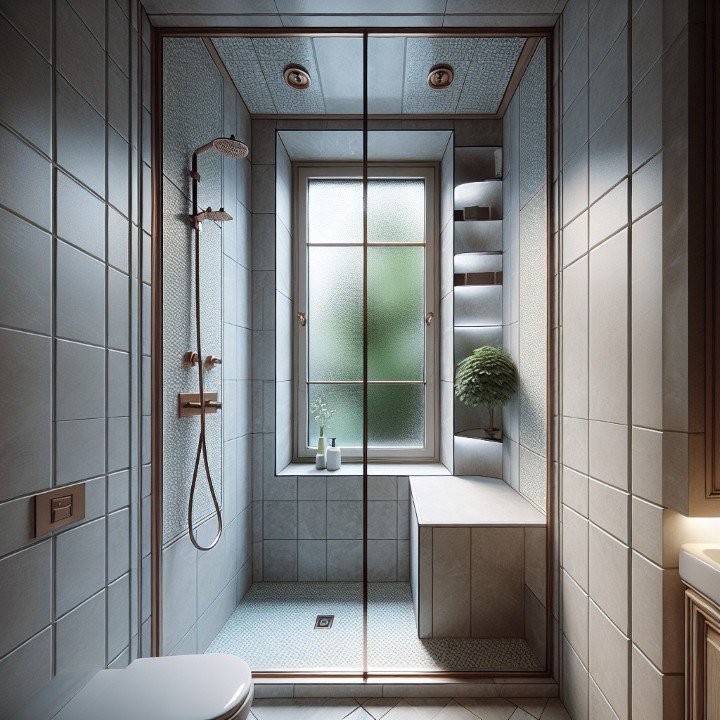
Redefining the “Small” Bathroom Experience
There is a common misconception in the world of interior design that luxury requires vast square footage. Many homeowners believe that a cramped footprint necessitates a traditional tub-shower combo or a bulky, claustrophobic stall. However, the modern design movement has proven that you can still have a world-class walk-in shower even if your bathroom is small.
Through this guide, you will find that a small bathroom is not a limitation—it is an opportunity for clever engineering and high-impact aesthetics. By transitioning to a walk-in concept, you eliminate visual clutter, improve accessibility, and instantly increase the resale value of your home. You can choose various walk-in shower concepts that are easy to apply, ranging from patterned tile focal points to unique architectural separators.
If you want to create your own sanctuary, this article provides the inspiration and the technical tricks necessary to make it happen. Let’s jump into the following review of stunning ideas and expert design strategies.
8 Stunning Walk-In Shower Ideas for Small Bathrooms
If you have a small bathroom, a stunning walk-in shower is well within reach. However, success lies in the details. The following eight ideas are curated to help you trick the eye, expand the space, and inject a sense of high-end luxury into even the tightest quarters.
-
Stick With White: The Power of Light Reflectance
This is one of the most reliable walk-in shower designs for making a bathroom feel more spacious. In design terms, we look at the Light Reflectance Value (LRV) of a color. White has the highest LRV, meaning it bounces light around the room rather than absorbing it.
The white color on the tiles and walls makes the atmosphere of the room feel open and airy. To take this further, consider using white subway tiles with white grout. This creates a “seamless” look that prevents the eye from stopping at the grout lines, effectively making the walls feel like they extend further than they actually do. You can also add glass panels to avoid puddles while maintaining that unbroken line of sight. If you want to add decorations, stick to bright accents to keep the “breezy” vibe alive.
-
Capture a Corner: The Neo-Angled Strategy
Even if your floor plan is exceptionally tight, you can still have a walk-in shower by utilizing the often-wasted space of a corner. One of the best ways to do this is by choosing a neo-angled base. A neo-angled shower is a diamond-shaped enclosure that cuts off the corner that would normally jut out into the bathroom’s walking path.
By choosing glass walls that step into the main bath area, you expand the interior of the shower without sacrificing the “flow” of the bathroom. This geometry provides enough space inside the shower for a comfortable experience while leaving external wall space open for towel racks or a small vanity.
-
Use Pretty Tile: Creating a Visual Focal Point
This is a clever trick to distract guests from the small dimensions of the room. When you use patterned and “pretty” tiles, you invite the eye to focus on the luxurious details rather than the walls’ proximity.
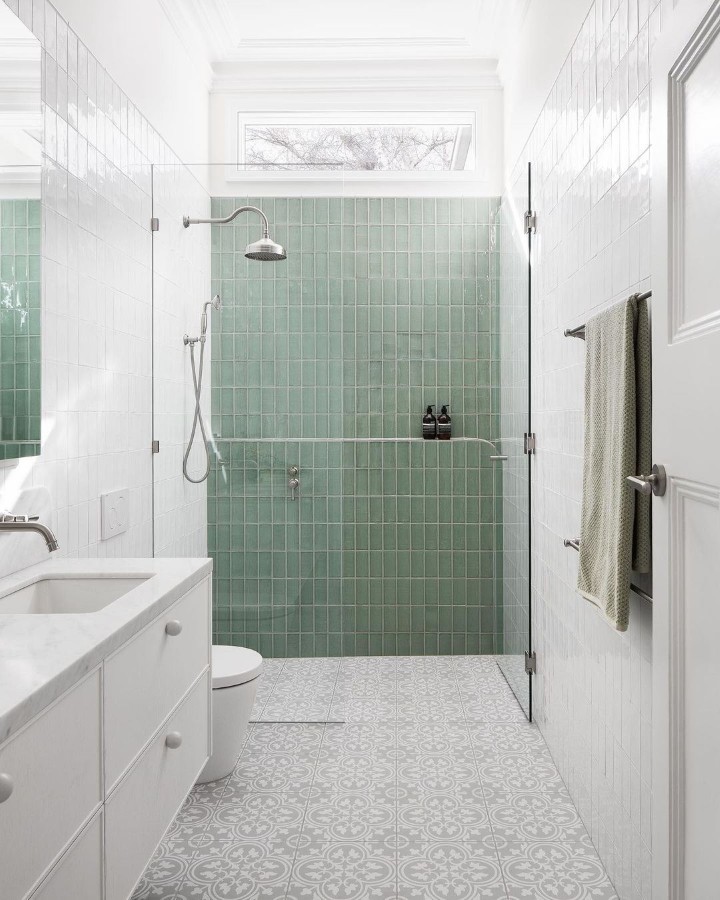
Consider adding tiles with geometric motifs or intricate Moroccan patterns. If you use the same patterned tile on both the floor and one “feature wall” inside the shower, you create a vertical draw that makes the ceiling feel higher. Matching the walk-in shower tiles with the rest of the bathroom floor creates a “wet room” effect that expands the floor’s perceived square footage.
-
Raise See-Through Walls: The Seamless Illusion
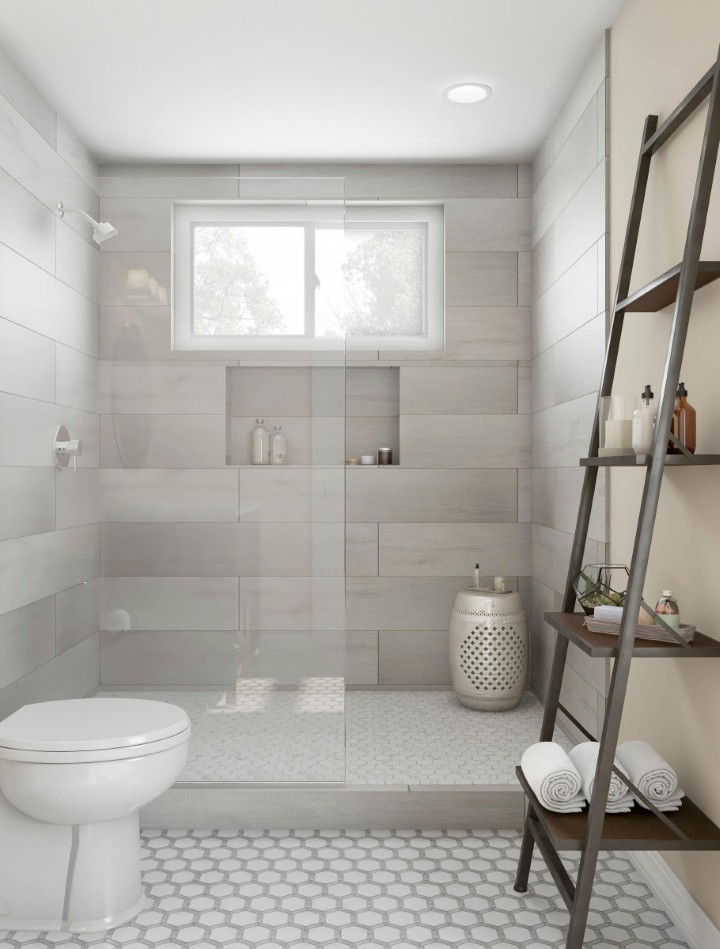
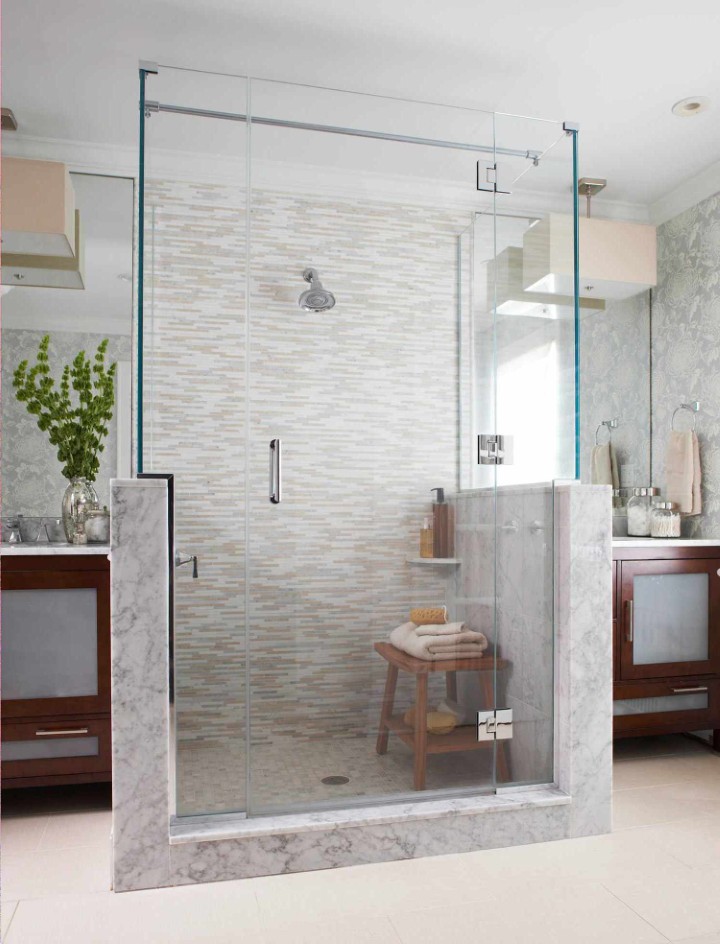
This idea is simple but visually transformative. Adding a walk-in shower with a seamless glass enclosure—specifically a frameless glass door—creates the illusion that the shower isn’t there at all.
Standard shower curtains or frosted glass act as visual “walls” that stop the eye, effectively cutting the room in half. Transparent glass lets natural light from windows reach the shower area, making the bathroom feel more alive and vibrant. To balance the “coolness” of the glass, add earthy colors like sand, taupe, or terracotta to the walls and tiles to make your bathroom feel like a peaceful, natural spa.
-
Keep It Bright: Beyond the Walls
If you want to make your bathroom feel more spacious, color is only half the battle; the other half is light intensity. By having bright colors on the tiles and walls, you create a bigger space, but you must supplement this with high-quality lighting.
If you choose a transparent walk-in shower, you can afford to use tiles with interesting but simple motifs, such as subtle polka-dots or “penny” tiles. These small patterns add texture without being overwhelming. Ensure your lighting fixtures are “Daylight” rated (around 5000K) to keep the whites looking crisp rather than yellowed and dingy.
-
Consider a Non-Glass Wall: The Multifunctional Partition
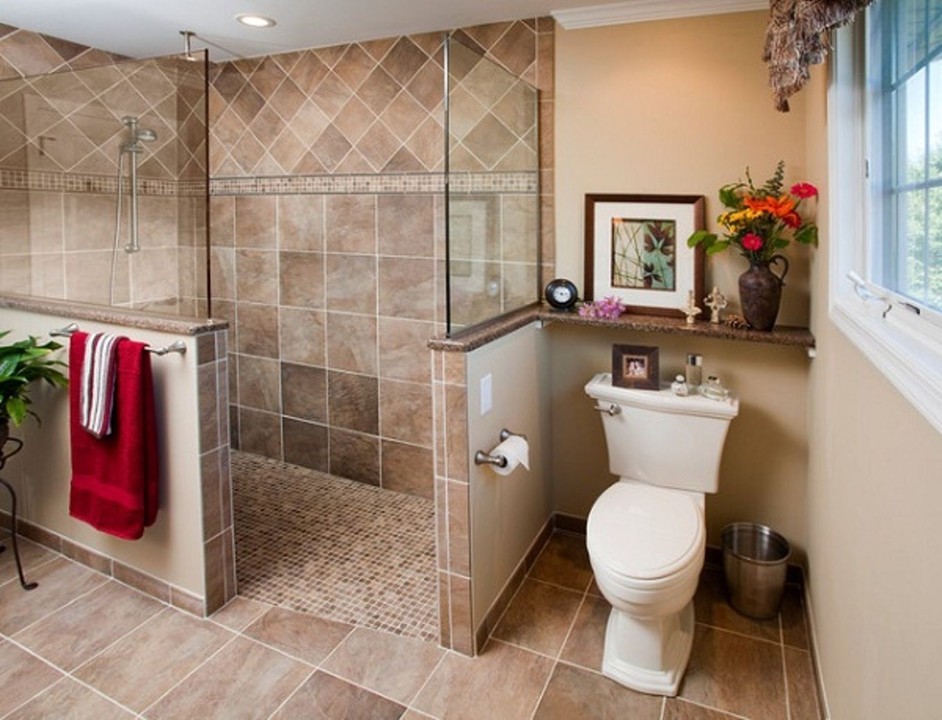
This is one of the walk-in shower ideas for small bathrooms that is most rarely applied, yet it is incredibly effective for organization. Having a non-glass wall—specifically a half-wall or “pony wall”—doesn’t necessarily make the room narrower.
You can create a half-wall to act as a shower guard and add a built-in shelf or niche on the dry side to store folded towels or decorative baskets. On the wet side, the same wall can house a recessed niche for shampoos. This is a brilliant separator because it provides privacy and storage simultaneously, eliminating the need for bulky external shelving units.
-
Have Stunning Hardware: The “Jewelry” of the Bathroom
You can add a shower kit made of brushed brass or champagne bronze to provide an immediate impression of luxury. In a small space, hardware acts as the “jewelry.” Because you don’t have room for large furniture, the faucets, showerheads, and handles must do the heavy lifting for the design.
For a cohesive look, add a mirror and a washbasin with the same metallic finish. To complement the brass hardware and keep the space looking expansive, add a classic lamp or a modern sconce made from the same material. This gives the small bathroom a “boutique hotel” feel that guests will love.
-
Install a Bench: Comfort and Functionality
Many believe benches are only for large, walk-in “steam rooms,” but a built-in bench is a functional choice for small bathrooms too. A bench can serve multiple purposes: a place to sit for comfort, a footrest for shaving, or a shelf for toiletries and towels.
To keep the bathroom looking streamlined, give the bench the same color as your wall tiles. A floating bench (one that doesn’t touch the floor) is particularly effective in small bathrooms because it leaves the floor visible, maintaining the illusion of a larger area.
Technical Deep-Dive—The “Wet Room” Concept
In 2026, the “Wet Room” has become the ultimate solution for small bathrooms. A wet room is a completely waterproofed bathroom where the shower has no enclosure or a very minimal glass screen, and the floor is sloped toward a drain.
Why Wet Rooms Work for Small Spaces
- Universal Design: They are inherently accessible (curbless), which is great for aging in place.
- No Visual Breaks: Because the floor is continuous, the bathroom looks twice as large.
- Ease of Cleaning: You can essentially spray down the entire room.
If you are considering a walk-in shower, ask your contractor about “tanking” (waterproofing) the entire room. While it costs more upfront, it allows you to fit a shower into spaces where a standard tray or enclosure simply wouldn’t fit.
3 Expert Tricks to Design a Walk-In Shower for Small Bathrooms
Now that you have a variety of inspiration, you need the technical “know-how” to execute the design. Here are three expert tricks to ensure your small walk-in shower functions as well as it looks.
-
Make It Reflective and Bright
Small bathrooms often suffer from a lack of windows. To combat this, you must manufacture brightness. Beyond just lighting, you should use reflective surfaces.
- High-Gloss Panels: Instead of traditional matte tiles, use high-gloss wall panels or glazed porcelain tiles. These have a mirror-like finish that doubles the light in the room.
- Color Choices: Beyond white, consider “glass-bottle green,” “soothing light blue,” or “pearl gray.” These colors feel sophisticated and reflective without being “boring.”
- Lighting Placement: Don’t just stick to a single ceiling light. Add LED strips behind the mirror or inside a recessed shower niche to create depth.
-
Embrace the Open Design (The Curbless Entry)
To create a wider atmosphere, you should aim for an open design without a heavy barrier between the toilet and the shower. This is best achieved through a curbless entry.
- The Slope: To prevent puddles, the floor must be professionally sloped toward the drain.
- Linear Drains: Instead of a traditional center drain, use a “linear drain” along one wall. Linear drains are sleeker and allow for the use of large-format tiles, which further minimizes grout lines and expands the space visually.
- Minimal Barriers: If you need a separator, a single fixed pane of glass is much more space-efficient than a swinging or sliding door.
-
Install a Designed Rain Shower with Modern Technology
In a narrow shower, a standard wall-mounted showerhead can feel restrictive. A rain shower design (mounted to the ceiling) is a game-changer for small walk-in showers.
- Vertical Space: It utilizes the vertical height of the room rather than the width. It cleans your entire body from head to toe without you having to move around a cramped enclosure.
- Pressure Solutions: Traditionally, rain showers lacked pressure. However, in 2026, we utilize self-pressurizing technologies or air injection technology. These systems mix air with the water to create a powerful, high-pressure stream while actually using less water.
- Aesthetic: A ceiling-mounted rain head looks incredibly modern and high-end, instantly signaling that this is a “designer” bathroom.
Material Selection—Porcelain vs. Natural Stone
Choosing the right material is vital for small showers where you will be in close contact with the walls.
- Porcelain Tiles: The best choice for small budgets. Porcelain is non-porous, meaning it won’t absorb water or mold easily. Large-format porcelain (e.g., 24×48 inches) is perfect for small showers because it creates fewer grout lines.
- Natural Stone (Marble/Travertine): Beautiful and luxurious, but requires maintenance. In a small, high-moisture shower, stone must be sealed every 6-12 months to prevent staining.
- Tadelakt or Microcement: This is a trending 2026 choice for small “wet room” showers. It is a seamless, waterproof plaster that creates a completely smooth surface with zero grout lines—the ultimate way to make a room feel infinite.
Maintenance and Ventilation: The Hidden Key to a Long-Lasting Walk-In Shower
In a small bathroom, moisture management is not optional—it is essential. Steam builds up faster, surfaces stay wet longer, and without proper ventilation, even the most beautiful walk-in shower can quickly lose its appeal. Mold growth, peeling paint, and water stains are not design flaws; they are maintenance failures.
A walk-in shower, especially one designed to make a small bathroom feel larger, needs adequate “breathing room.” This does not mean physical space, but rather proper airflow, smart material choices, and consistent daily habits. When these elements work together, your shower remains fresh, hygienic, and visually stunning for years.
High-CFM Ventilation: Your First Line of Defense
The exhaust fan is one of the most overlooked components in a bathroom renovation, yet it plays a critical role in protecting your investment. In a small bathroom, moisture concentration increases rapidly, meaning weak ventilation can allow condensation to settle on walls, ceilings, mirrors, and inside grout lines.
A high-CFM (Cubic Feet per Minute) exhaust fan ensures that humid air is removed quickly and efficiently. As a general rule, your fan should be rated appropriately for the room’s square footage, but in bathrooms with walk-in showers—especially enclosed glass showers—opting for a slightly higher CFM is a smart move.
Proper ventilation helps to:
- Prevent mold and mildew growth in corners and grout lines
- Protect paint, drywall, and cabinetry from moisture damage
- Reduce lingering odors
- Maintain healthier indoor air quality
If possible, choose a fan with a humidity sensor or timer. These features ensure the fan runs long enough after your shower to fully clear the moisture, even if you forget to turn it off manually.
The Squeegee Habit: A Small Action with Big Results
If your walk-in shower includes a glass wall or enclosure, maintaining clarity is key to preserving the open, spacious look. Glass that is streaked with water spots or mineral buildup instantly makes a bathroom feel smaller and less refined.
Developing a simple squeegee habit can make a dramatic difference. Taking just 30 seconds after each shower to wipe down the glass removes water droplets before they evaporate and leave behind hard water stains.
Over time, this habit:
- Keeps glass panels crystal clear
- Reduces the need for harsh chemical cleaners
- Prevents permanent etching from mineral deposits
- Maintains the “invisible wall” effect that visually expands the room
In small bathrooms, visual cleanliness is just as important as physical cleanliness. Clear glass allows light to flow freely, reinforcing the illusion of space.
Anti-Microbial and Epoxy Grout: Smart Choices That Last
Grout is often the weakest link in any tiled shower. Traditional cement-based grout is porous, meaning it absorbs moisture, soap residue, and bacteria over time. In a small bathroom where humidity levels remain high, this can lead to discoloration and mold far sooner than expected.
Specifying epoxy or anti-microbial grout during installation is one of the best long-term decisions you can make. These modern grout options are designed to resist moisture absorption and inhibit bacterial growth.
Benefits include:
- Greater resistance to staining and discoloration
- Minimal maintenance requirements
- Longer lifespan compared to standard grout
- A consistently clean appearance
While epoxy grout may cost more upfront, it significantly reduces ongoing maintenance and preserves the “new shower” look for years, making it a cost-effective choice in the long run.
Professional Recommendations for Homeowners Renovating a Small Bathroom
Before beginning your renovation, thoughtful planning can prevent costly mistakes and maximize every inch of available space. Small bathrooms are unforgiving environments—precision matters.
Measure Three Times, Not Twice
In compact spaces, even a two-inch miscalculation can cause major functional issues. A door that cannot fully open, a toilet with insufficient clearance, or a shower enclosure that feels cramped are all common outcomes of rushed measurements.
Always draw your floor plan to scale, including:
- Door swing paths
- Fixture clearances
- Shower dimensions
- Vanity depth
Using accurate measurements allows you to visualize movement within the room and ensure every element works harmoniously.
Go Curbless If Your Budget Allows
If there is one design decision that has the greatest impact on a small bathroom, it is choosing a curbless (zero-entry) shower. Removing the threshold creates an uninterrupted floor plane, making the room feel significantly larger and more modern.
Curbless showers offer several advantages:
- Improved accessibility and safety
- A seamless, spa-like aesthetic
- Enhanced visual flow
- Easier cleaning
While curbless designs require additional waterproofing and proper floor slope, the visual payoff is unmatched—especially in tight spaces.
Recess Everything You Can
In a small bathroom, space is not only defined by floor area but also by how much you can reclaim from within the walls. Recessed storage solutions are invaluable.
Consider recessing:
- Medicine cabinets
- Shower niches
- Shelving units
By utilizing wall cavities, you reduce visual clutter and maintain clean, flush surfaces. Every inch you “steal” from the wall cavity contributes to a more open and efficient layout.
Invest in High-Quality Hardware
One advantage of renovating a small bathroom is that reduced square footage often means lower material costs overall. Use this opportunity to upgrade the elements that matter most.
High-quality showerheads, solid brass fixtures, and durable valves enhance both functionality and daily enjoyment. These components are touched and used every day, and inferior hardware tends to fail faster in humid environments.
Premium fixtures offer:
- Better water pressure control
- Longer lifespan
- Superior finishes that resist corrosion
- A noticeable upgrade in comfort and aesthetics
When the footprint is small, details carry more visual weight—quality always shows.
Conclusions – Design That Performs as Beautifully as It Looks
In conclusion, a small bathroom is no reason to abandon the dream of a luxurious walk-in shower. By utilizing the “Stick with White” philosophy, capturing corners with neo-angled bases, and using seamless glass to maintain sightlines, you can create a room that feels twice its physical size.
Tricks like reflective surfaces, open designs, and rain shower technology allow you to maximize functionality without sacrificing style. Whether you choose the artistic flair of patterned tiles or the minimalist luxury of a wet room, your walk-in shower will become the highlight of your home. It’s time to stop seeing your bathroom as “too small” and start seeing it as a masterclass in modern, efficient design. Hopefully, this information serves as the perfect reference to make your bathroom more comfortable, stunning, and valuable!
A walk-in shower can transform a small bathroom into a refined, spa-like retreat—but only when design and maintenance work together. Ventilation, smart material choices, and disciplined habits ensure that your bathroom remains fresh, functional, and visually expansive.
By prioritizing airflow, choosing long-lasting materials, measuring with precision, and investing in quality where it counts, homeowners can achieve a space that not only looks stunning on day one but continues to perform beautifully for years to come.