Why Halloween is Serious Business for Team Building
In the modern corporate landscape, the concept of “family” extends beyond bloodlines. We spend approximately one-third of our lives at work—often seeing our colleagues more than our actual relatives. Consequently, the office environment plays a pivotal role in our mental well-being and job satisfaction. While metrics and KPIs drive business, culture drives people.
Halloween, often dismissed as a holiday for children or a frivolous distraction, presents a unique, high-value opportunity for organizations. It is one of the few secular celebrations that allow for unbridled creativity, role-playing, and environmental transformation. Unlike religious holidays which can sometimes alienate certain demographics, Halloween in the workplace—when executed with sensitivity and creativity—is a neutral ground for fun.
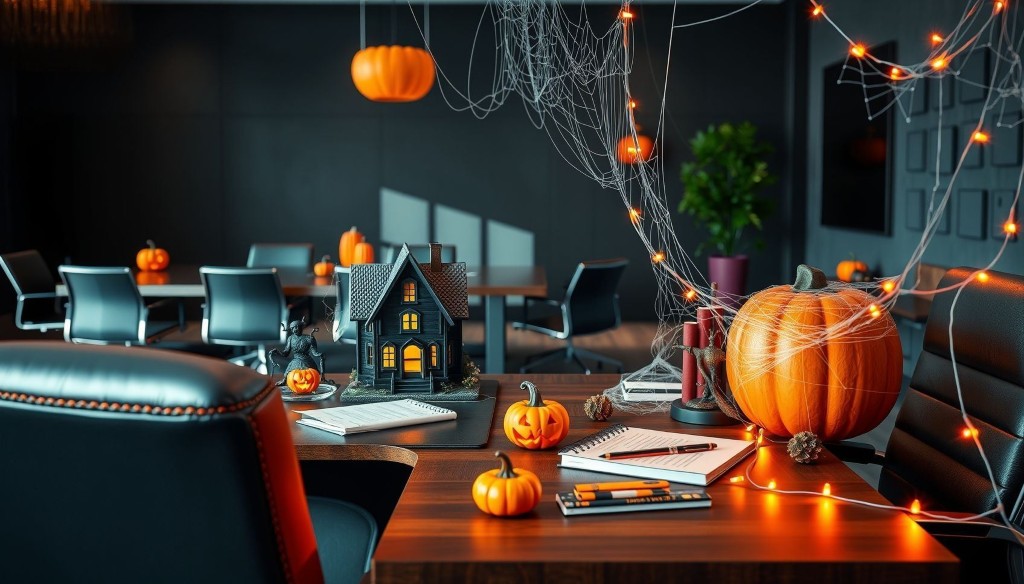
For leaders and managers, this is not just about hanging fake cobwebs; it is a strategic exercise in team bonding. Allowing staff to curate their environment, even temporarily, fosters a sense of ownership and psychological safety. It signals that the leadership values the “whole person,” not just the worker bee.
This guide will take you through the what, why, and when of Halloween office décor. We will explore how to balance productivity with festivity, detailed DIY tutorials, specific budgeting price ranges, and how to navigate the fine line between “spooky” and “distracting.”
Part I: The Psychology of Celebration in the Workplace
Why Decorate? The Impact on Morale
Before diving into the glue guns and glitter, it is essential to understand why we are doing this. A sterile office environment can stifle creativity.
- Breaking the Monotony: Routine is the enemy of innovation. Visually altering the workspace disrupts the brain’s pattern recognition, potentially sparking new ideas.
- Humanizing the Professional: Seeing a reserved accountant dressed as a vampire or a strict manager participating in a desk decorating contest humanizes them. It breaks down rigid hierarchical barriers, making communication easier long after the pumpkins have rotted.
- Retention Strategy: In a competitive job market, “culture” is a currency. Employees are more likely to stay with a company that offers moments of joy and community.
The “Family” Dynamic at Work
As mentioned in the introduction, your office mate is your “work family.” Shared experiences create shared memories. When a team works together to turn a row of cubicles into a “Haunted Graveyard,” they are practicing project management, resource allocation, and collaboration in a low-stakes, high-reward environment.
Insight for Leaders: View Halloween planning as a microcosm of project work. Assign a “Halloween Committee.” Watch who steps up as a leader, who is the organizer, and who is the creative visionary. It is a subtle way to identify soft skills in your workforce.
Part II: Guidelines for a Productive yet Spooky Office
Decorating the office does not mean sacrificing the Q4 targets. The challenge lies in finding the “Goldilocks Zone”: festive enough to be fun, but disciplined enough to remain productive.
-
The Golden Rule: Mobility and Safety
- The Problem: Overzealous decoration can create fire hazards or block emergency exits. A “messy robe” or trailing fabric on the floor is a tripping hazard.
- The Solution: Decor should be vertical, not obstructive. Keep walkways clear. Ensure that no decorations touch light fixtures or heat sources. If you are decorating a cubicle, ensure your chair can still swivel 360 degrees without catching a fake spiderweb.
-
Aesthetic Value: Chic vs. Gore
- The Problem: A “crime scene” that looks too realistic can be genuinely disturbing to clients or sensitive colleagues.
- The Solution: Aim for “Spooky Chic” or “Campy Fun” rather than “Slasher Horror.”
- Avoid: Excessive fake blood, weapons, or political imagery.
- Embrace: Gothic elegance (black lace, silver candelabras), classic tropes (pumpkins, ghosts, bats), or pop culture themes (Harry Potter, Stranger Things).
- Productivity Tip: A clean desk is a productive desk. Do not clutter the actual work surface (the space where the keyboard and documents live). Restrict decor to the monitor rim, the cubicle walls, and the floor space immediately underneath the desk (if visible).
-
Noise and Distraction Control
- The Problem: Decorations that make noise (cackling witches, motion-sensor screams) are the fastest way to annoy coworkers and ruin concentration.
- The Solution: Visuals only. Unless it is the specific hour of the office party, all decorations should be silent.
Part III: Detailed Halloween Office Decorating Ideas (Step-by-Step)
Here, we expand on classic ideas with detailed instructions to ensure execution is easy and professional. These ideas range from individual desk efforts to team-wide installations.
Idea 1: The “Head in a Jar” Prank
Level: Easy | Impact: High
This is a classic prank that fits perfectly inside an office fridge or on a desk corner. It is creepy but self-contained.
- Materials Needed:
- Large Mason jar or plastic container (5 liters).
- A high-resolution photo of a face (yours or a volunteer’s).
- Photo editing software (or a skilled friend).
- Lamination machine/paper.
- Water.
- Green and yellow food coloring.
- Synthetic hair (optional).
- The Process:
-
- Take the Photo: Take a photo of a face straight-on and another from the side. Blend them in editing software to create a flat “unrolled” texture of the head.
- Print and Laminate: Print the image on high-quality paper. It is crucial to laminate the photo; otherwise, the water will destroy it immediately. Trim the lamination close to the edge of the image.
- The Submersion: Roll the laminated photo and insert it into the jar. It should press against the glass.
- The Atmosphere: Fill the jar with water. Add two drops of green food coloring and one drop of yellow to create a murky, formaldehyde look.
- Placement: Place this in the breakroom fridge for a shock, or on your desk as a paperweight.
Idea 2: The Wicked Witch Reception Desk
Level: Medium | Impact: Very High
The reception area is the face of the company. It needs to be inviting yet thematic. This idea uses the architecture of a high desk to simulate a scene.
- The Concept: Transform the reception desk into a witch’s brewing station or a crashed landing site.
- Materials:
- Black bulletin board paper or black fabric.
- Cardboard (for silhouettes).
- Dry ice (optional, for safe use only).
- A cauldron (plastic).
- Green LED strip lights.
- The Process:
-
- The Crash: Create a pair of legs wearing striped stockings and ruby slippers (Wizard of Oz style) sticking out from under the desk, as if the house/desk landed on the witch.
- The Silhouette: Cut large bat and moon shapes from black cardboard and attach them to the front of the desk.
- The Potion: Place a plastic cauldron on the corner of the reception desk. Place green LED lights inside it to make it “glow.” Fill it with candy for guests. Note: Avoid real dry ice in unventilated spaces; use cotton batting to simulate smoke instead.
Idea 3: The Spider Web Cubicle Takeover
Level: Easy | Impact: Medium
Perfect for the minimalist who wants to participate without spending hours crafting.
- The Process:
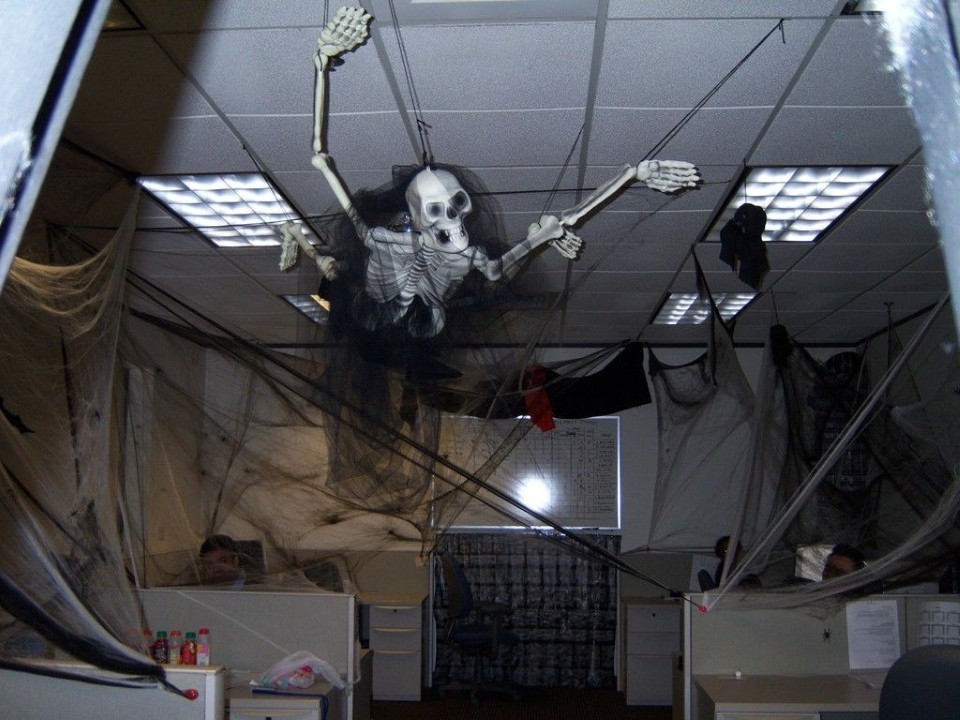
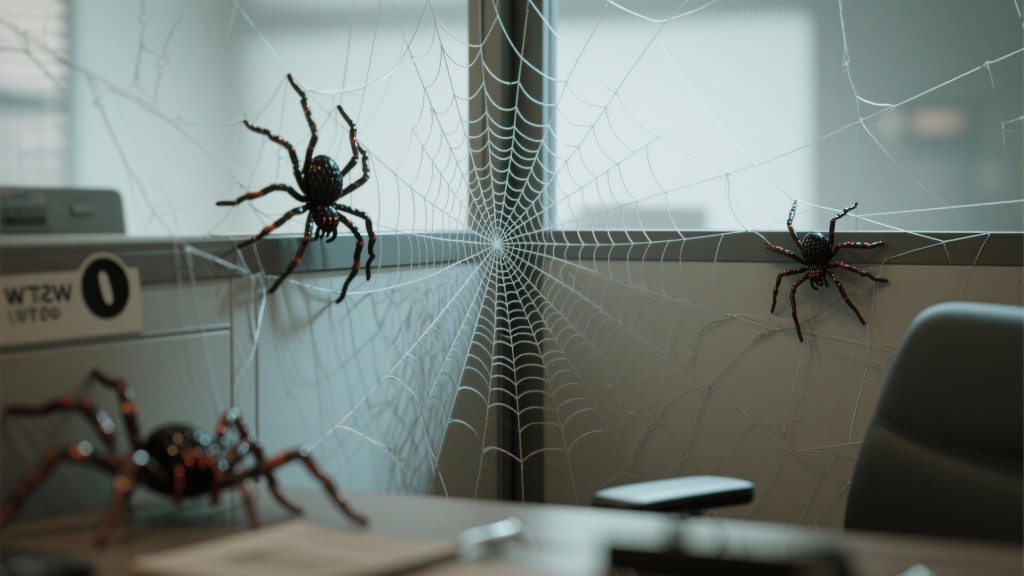
- The Web: Purchase “Stretch Spider Web” (poly-fill material). The trick to making it look real is to stretch it extremely thin. If it looks like clumps of cotton, you failed. It should be barely visible strands.
- The Anchor Points: Hook the web over the corners of your monitor, the cubicle walls, and your chair.
- The Inhabitants: Place varying sizes of plastic spiders. Put one large “Mother Spider” on top of the computer monitor and smaller ones descending down the side.
- Elegance Tip: Use white webbing for a classic look, or neon green webbing if your office has a modern, techy vibe.
Idea 4: Ghost in a Jar (The Aesthetic Choice)
Level: Easy | Impact: Chic/Minimalist
For offices that prefer a “Pottery Barn” Halloween look over a “Spirit Halloween” look.
- Materials:
- Mason jars of various sizes.
- Cheesecloth or gauze bandages.
- Liquid starch (to stiffen the fabric).
- Battery-operated tea lights.
- Twigs/branches.
- The Process:
-
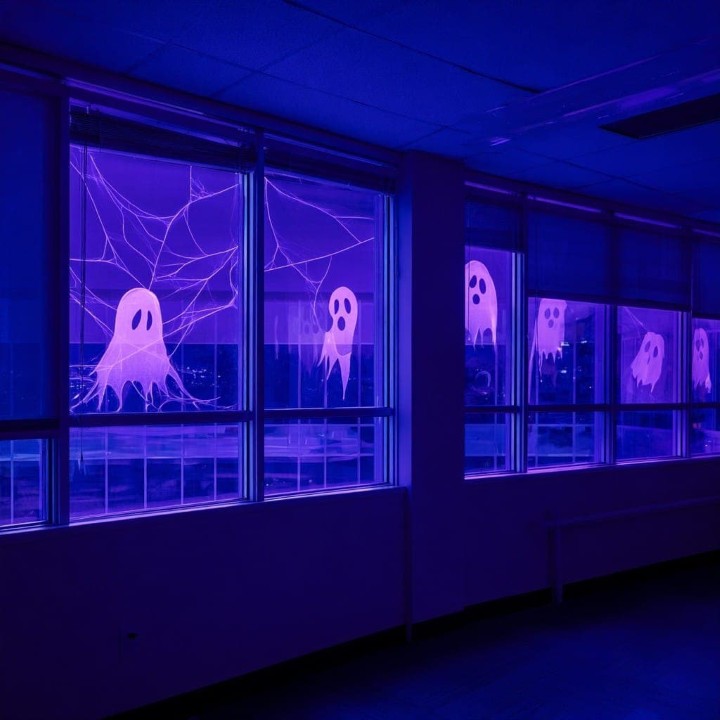
- Form the Ghost: Dip the cheesecloth in liquid starch. Drape it over a small balloon or ball (to form the head) and let it dry overnight. Once dry, it will hold its shape.
- The Capture: Carefully place the stiffened ghost inside the jar.
- The Glow: Place a battery-operated tea light at the bottom of the jar.
- Display: Arrange 3-5 jars on a desk or windowsill. Intersperse them with dry twigs or autumn leaves for a rustic, elegant feel.
Idea 5: The Interactive “Wheel-O-Treats”
Level: Advanced | Impact: High Engagement
This gamifies the holiday and serves as a great icebreaker.
- The Process:
- The Build: Use a spinning prize wheel (often available for rent or purchase, or DIY with cardboard and a fidget spinner mechanism).
- The Segments: Label the wedges with “Trick” or “Treat.”
- Treats: King-size candy bar, leave 15 mins early pass, $5 coffee card.
- Tricks: Sing a song, wear a funny hat for an hour, tell a dad joke.
- The Rules: Everyone gets one spin during lunch.
Idea 6: The “CSI” Crime Scene (Office Edition)
Level: Medium | Impact: Funny
This works best in a hallway or a shared open space.
- The Concept: A “murder” mystery where the victim is “productivity” or a “printer that never works.”
- Materials:
- Masking tape or white duct tape.
- “Evidence” markers (plastic number tents).
- Caution tape.
- The Process:
-
- The Body Outline: Use the tape to outline a body on the floor (carpet or tile).
- The Twist: Instead of a human shape, outline a smashed computer, a spilled coffee cup, or a pile of paperwork. This adds humor and avoids the “too dark” vibes of a real body outline.
- The Evidence: Place evidence markers next to “weapons” like a stapler, a hole puncher, or a jam-packed schedule.
Part IV: Planning and Budgeting
To assist HR managers and team leaders, we have compiled a concrete breakdown of expected costs. This ensures the celebration remains within the company’s discretionary spending limits.
Concrete Price Ranges and Solutions
The following table estimates costs for decorating a standard 10-person team area.
| Category | Item Description | DIY Cost (Est.) | Store-Bought Cost (Est.) | Budget Saving Tip |
| Decor | Fake Cobwebs & Spiders | $5 – $10 | $15 – $25 | Buy cotton batting in bulk from fabric stores. |
| Decor | Desktop Pumpkins (x10) | $15 (Real mini pumpkins) | $40 (Ceramic/Foam) | Buy real pumpkins; they are cheaper and biodegradable. |
| Costume | Props (Hats, Masks) | $0 – $20 (Cardboard/Paper) | $50 – $100 | Ask staff to bring items from home to share. |
| Food | Candy & Chocolate Pot | $20 – $30 | $50 – $80 | Buy bulk bags post-Easter or at wholesale clubs. |
| Lighting | LED Tea lights/String lights | $10 – $15 | $30 – $50 | Reuse Christmas lights (white or orange). |
| Prizes | Contest Awards | $0 (Bragging rights/Certificates) | $50 (Gift cards) | Offer “Time Off” coupons instead of cash. |
| TOTAL | Estimated Team Cost | $50 – $75 | $235 – $300+ | Go DIY for 75% savings. |
The Timeline: When to Start?
- October 1st: Announce the theme and rules. Form the committee.
- October 15th: Begin “light” decorating (desktop items).
- October 25th: Full office decoration (communal areas).
- October 31st: The Event (Costumes, food, games).
- November 1st: Immediate Cleanup. Nothing looks sadder than a sagging cobweb in November.
Part V: Navigating Potential Pitfalls (The “Don’ts”)
To ensure your article is truly comprehensive, we must address the risks.
-
Cultural Sensitivity:
Avoid costumes or decorations that caricature cultures, races, or mental health issues. “Crazy Asylum” themes are generally frowned upon in modern inclusive workplaces. Stick to supernatural themes (witches, ghosts, vampires) rather than realistic tragedies.
-
The “Mandatory Fun” Trap:
Never force participation. Some employees may not celebrate for religious or personal reasons. Ensure they do not feel alienated or penalized for opting out. The goal is inclusion, not coercion.
-
The Clutter Crisis:
As noted in the source text, “You don’t want your cubicle to look like a crime scene” (in the messy sense). Maintain a policy of “Leave No Trace.” If glitter is used, the person who used it is responsible for vacuuming it up.
Part VI: Conclusion and Recommendations
Conclusion: Why Halloween at Work Actually Matters
Halloween in the office is often misunderstood as a lighthearted distraction—something optional, decorative, or even slightly indulgent. Yet when viewed through a more strategic and human lens, it becomes clear that workplace Halloween celebrations are far more than costumes and cobwebs. They are, in fact, a visible expression of organizational values. They reveal how a company understands joy, how it nurtures creativity, and how it acknowledges the humanity of the people who power it every day.
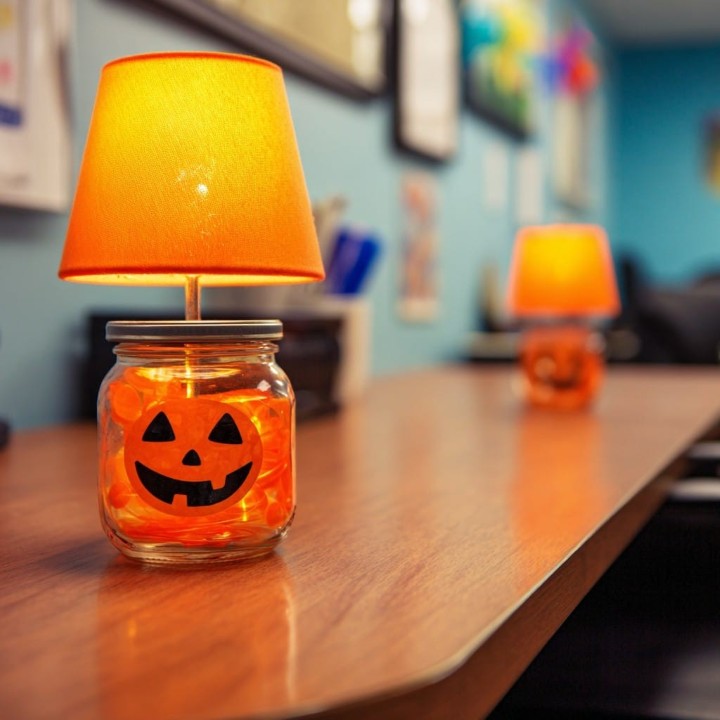
At its core, an office Halloween celebration signals permission. Permission to step outside rigid professional identities. Permission to laugh, to play, and to connect with colleagues beyond job titles and performance metrics. When employees are allowed—even encouraged—to decorate their cubicles with playful ideas like a “Head in a Jar,” transform a reception desk into a “Wicked Witch’s Lair,” or softly illuminate their workspace with understated “Ghost in a Jar” lights, something subtle but powerful happens. The workplace shifts from being merely functional to genuinely relational.
These moments of shared creativity build emotional memory. People may forget the details of a quarterly meeting, but they remember the coworker who turned their cubicle into a spider-infested haunted house or the team that collaborated on a perfectly timed spooky reveal. Over time, these shared experiences accumulate into something far more valuable than décor: trust, camaraderie, and a sense of belonging.
In an era where employee retention is fragile and burnout is widespread, culture can no longer be treated as a side benefit. It is a core operational asset. Halloween provides a rare opportunity to express that culture in a tangible, visible, and inclusive way. Unlike exclusive off-site retreats or expensive perks that only benefit a few, Halloween decorations and activities invite participation at every level of the organization. From interns to executives, everyone occupies the same playful arena.
Importantly, Halloween celebrations also allow for individual expression within a shared framework. Some employees may gravitate toward bold, theatrical setups—a full “Spider Cubicle” takeover complete with webbing, sound effects, and dramatic lighting. Others may prefer subtle elegance, opting for a minimalist spooky aesthetic that complements their professional environment. Both approaches are valid, and when leadership respects that range, it reinforces an important message: individuality is welcome here.
However, the success of Halloween at work does not lie in excess. It lies in balance. Balance between fun and functionality, ensuring productivity is supported rather than disrupted. Balance between spooky and safe, with attention to physical accessibility, fire safety, and comfort for all employees. Balance between spending and creativity, where imagination matters more than budgets.
When done thoughtfully, Halloween becomes a low-cost, high-impact investment in morale. It humanizes leadership, strengthens peer relationships, and reminds people that work does not have to be sterile to be serious. On the contrary, environments that allow joy often unlock higher engagement, stronger loyalty, and better collaboration long after the decorations come down.
Ultimately, office Halloween celebrations are not about ghosts, witches, or skeletons. They are about people. They are about creating moments where employees feel seen, valued, and connected—to each other and to the organization they contribute to every day.
Recommendations for Leaders: Turning Halloween into a Cultural Asset
For leaders, managers, and HR professionals, Halloween should not be treated as an afterthought or delegated without intention. When guided properly, it can become a strategic cultural touchpoint that reinforces trust, inclusion, and engagement. The following recommendations offer a deeper framework for making Halloween meaningful rather than merely decorative.
-
Define the Budget Early and Communicate It Clearly
One of the fastest ways to dampen enthusiasm is ambiguity around spending. When employees are unsure whether they are expected to fund decorations themselves, participation becomes uneven and, in some cases, exclusionary. Some people will overextend financially out of social pressure, while others will opt out entirely to avoid the cost.
Leaders should eliminate this friction by defining a modest but clear budget from the outset. A small, centralized “Culture Fund” communicates fairness and intentionality. It also signals that the organization values collective experiences enough to invest in them, even in simple ways.
This budget does not need to be large. In fact, constraints often fuel creativity. What matters more than the amount is transparency. When teams know the boundaries, they can collaborate, plan, and innovate without stress. Additionally, allowing departments to pool their allocations encourages teamwork and shared ownership of the celebration.
Just as important is making it explicit that personal spending is optional, not expected. When employees choose to add their own touches, it should come from enthusiasm, not obligation.
-
Gamify the Experience to Drive Engagement
Humans are naturally motivated by play, recognition, and friendly competition. Simply allowing decorations may generate mild interest, but introducing a competitive element transforms passive participation into active engagement.
Consider organizing themed challenges or awards such as “Best Cubicle,” “Most Creative Concept,” “Funniest Execution,” or “Best Team Collaboration.” The prizes do not need to be extravagant. Often, symbolic rewards—a humorous trophy, a certificate, or even public recognition—carry more emotional weight than material incentives.
The key is framing the competition as inclusive and lighthearted rather than high-pressure. Clear judging criteria help avoid misunderstandings and ensure participants feel appreciated for effort, not just polish. Rotating judges or allowing peer voting can also increase buy-in and transparency.
Gamification turns Halloween from a visual backdrop into a shared experience. It gives people something to talk about, anticipate, and celebrate together. In doing so, it strengthens informal bonds that later support formal collaboration.
-
Encourage Cross-Team Collaboration
One often overlooked benefit of office celebrations is their potential to break down silos. Leaders can amplify this effect by encouraging cross-functional teams to collaborate on shared decorations or themes.
For example, marketing and operations might jointly design a spooky “campaign,” or IT and finance could co-own a shared area. These low-stakes collaborations create opportunities for employees who rarely interact to work together creatively, building familiarity and trust that carry over into everyday work.
Leaders can facilitate this by offering shared spaces, recognizing collaborative efforts specifically, or simply modeling cross-team participation themselves.
-
Prioritize Inclusivity and Psychological Safety
Not everyone experiences Halloween the same way. Cultural backgrounds, personal beliefs, and individual comfort levels vary widely. A successful celebration respects these differences without dampening enthusiasm.
Leaders should emphasize that participation is optional and that there are many ways to engage—from decorating, to voting, to simply enjoying the atmosphere. Avoid themes that rely on graphic horror, offensive stereotypes, or potentially sensitive imagery. When in doubt, err on the side of creativity over shock value.
Accessibility also matters. Decorations should not obstruct walkways, create tripping hazards, or interfere with essential work functions. Safety guidelines should be communicated early and framed as part of caring for one another, not as restrictions on fun.
-
Document the Event with Intention
Halloween provides a rare opportunity to visually capture company culture in action. High-quality photos and short videos can become powerful storytelling tools when used thoughtfully.
Assign someone—whether an internal communications lead or a skilled volunteer—to document the event professionally. Capture details, candid moments, and wide shots that convey energy and participation. These assets can be used in internal newsletters, onboarding materials, recruitment campaigns, and employer branding on platforms like LinkedIn.
However, consent matters. Always ensure employees are comfortable being photographed and understand how images may be used. Transparency builds trust and ensures documentation feels celebratory rather than intrusive.
-
Lead by Example
Perhaps the most influential factor in any cultural initiative is leadership behavior. When leaders participate—whether by decorating, dressing up, or simply engaging with enthusiasm—it sends a clear message that fun and professionalism are not mutually exclusive.
Conversely, when leadership remains distant or dismissive, employees often follow suit. Authentic participation from leaders humanizes authority and reinforces the idea that culture is shared, not imposed.
Next Steps:
Are you ready to transform your office? Start by forwarding this article to your HR department or office manager today to initiate the planning for a spook-tacular October!
Disclaimer: All price ranges are estimates based on 2025 market averages and may vary by location and retailer. Always adhere to your building’s fire safety codes.